Harold Ramis has died at the age of 69. He directed two films dear to me, Groundhog Day and Ghostbusters, and had a hand in many others I enjoyed. By all accounts, he was a selfless collaborator, and this is amply on display in Ghostbusters, which Ramis acted in and cowrote with Dan Aykroyd. Ramis plays Egon Spengler, the no-nonsense brains of the outfit, meaning he delivers some great lines deadpan, but mostly plays straight man to Bill Murray and Aykroyd – and let them have most of the funniest lines. (He also often showed sound judgment as a writer and director, as when he rejected a studio idea that the cause of Phil's Groundhog Day predicament should be a jilted ex soliciting a gypsy curse on him.) Some great tributes have been written to Ramis, but I wanted to take a look at Ramis' craft and artistry, especially since comedy often don't get no respect.
The difference between a decent comedy and great one is often just a few elements, and Ramis' successes demonstrate that well. Three aspects stand out for me – the ending, exploring the premises, and the human core of the story. (Obviously, in a good story, all of these will overlap.)
Let's begin with endings. They can be tricky, and it's not uncommon for a story to go for the big climatic scene and flop. The typical forced-versus-earned climax chooses spectacle over character, and loses sight of what made us invest in the story earlier. A forced climax in action and horror films tends to be a big-but-hollow CG spectacular. Comedies often build toward madcap mayhem, the ultimate chaos of the film – but in the forced versions, it all feels strained and artificial. In The Party, the forced climax is the all-too-predictable, everyone-in-the-pool-with-the-baby-elephant bit. (Some people love the film; I think Peter Sellers is brilliant and delivers some great moments, including a hilarious Gunga Din parody, but don't like the overall flick much.) In American Pie 2, it's the turn into the third act – the overamped-for-the-circumstances scene where the bros hear their other bro is distraught and has gone walking on the beach alone (oh noes!) so they must find him urgently, pull him out of the film's lowest moment (bro despair of little more than a minute or two) and then stride back to the beach house together, gorgeously lit as the music swells, bro-triumphant. (I only saw the first two films in the series, and they have their moments, but that sequence felt forced, unearned and reeked of filmmaker desperation.) I'm sure readers can come up with their own examples. But compare the misses with the finale of Ghostbusters. The extended showdown with the demon Gozer, who transforms into the giant Stay-Puft Marshmallow Man, is absolutely hilarious. The editing build-up of teases and reveal is perfect, Dan Aykroyd's lead-in is masterful, and the ensemble play off each other beautifully, with some classic lines. (Ramis: "I'm sorry Venkman, I'm terrified beyond the capacity for rational thought.") The climatic parade mayhem scene Animal House is likewise actually funny. In a different tone, Groundhog Day's big celebratory party scene feels completely earned, as does the final morning wake-up scene. Ramis knew how to set up his partners for a topper, and at his best, he really stuck the landing.
Many films don't fully explore their own premises. It's a key frustration for viewers of a near miss, usually voiced something like, "They had a good idea, but they just didn't know what to do with it!" The better the core idea, the more maddening the whiff is. In the best films, that exploration has happened during the writing process, dozens of bad (or merely not as strong) ideas have been tried out and discarded, and the final script reflects all that thought and experimentation. The best scripts work through all the weak spots until the character(s) and the plot click together and are inseparable. Groundhog Day is one of those films for me, and I've praised it more times than I can remember on those grounds. I found it immensely satisfying when I first saw it, because every time I thought, "What about...? What if he tried..?" the filmmakers actually explored it. (Groundhog Day was originally written by Danny Rubin, but it was significantly reworked in collaboration with Harold Ramis, and both authors deserve some credit for the script's success.) Dumb characters are maddening to watch. Phil (Bill Murray) is certainly selfish, self-destructive or despairing at points in the movie, but he's not dumb. He tries everything – personal advantage, charity, suicide, conning Rita (Andie MacDowell), and many other approaches. The basic idea of being stuck in a particular place has been explored countless times in storytelling, and the idea of being stuck in a specific day or returning to the same spot has been done several times in sci-fi. (I've actually argued that Groundhog Day can be viewed as sci-fi/fantasy/speculative fiction – using an unusual situation to explore some facet of the human experience.) Groundhog Day covers similar ground to other "trapped" stories, and it's actually funny to boot (even moving). That's quite the feat.
On that point – Groundhog Day works so well because Phil not only amuses us, we begin to really care about him and his predicament. There's a human core to the story. (In Ghostbusters, that element isn't as strong or crucial, but we do grow to like the team.) Groundhog Day is one of Bill Murray's best performances, and the importance of that can't be underestimated. But the screenplay, cowritten by Ramis, creates the path, and Ramis' direction guides that performance and sets the story's pace and build. There's a great line in The Fisher King where Jack (Jeff Bridges), who's in genuine despair and feeling deserved guilt, says, "I wish there was some way I could just pay the fine and go home." He wants an easy out rather than actually changing. One of the triumphs of the The Fisher King is that it fully explores that dynamic and what it takes for Jack to truly transform, and Groundhog Day pulls off something identical. After a lovely night with Rita, Phil tries to recreate the magic another night, but it's forced and artificial, and doesn't work. In a different vein, he tries to save the life of a homeless man, but nothing he tries succeeds. Both of those elements are pretty damn profound for something sold as a comedy. (The sequence of deaths is also masterfully assembled.) Death can't be cheated forever, and sometimes not even for day; true love is not a matter of tricks or following the um, perfect script, but of honestly, intimately connecting with a human being. Call it soul or heart, but we need to care about Phil for the film to resonate ultimately; Ramis and the rest of the team provide a recognizable human experience in the fantastical by grounding the proceedings in an emotional reality. ("Imaginary gardens with real toads in them.")
All of this is to say that Harold Ramis' best work shows a craftsmanship and artistry that's genuinely impressive. Here are a few scenes to demonstrate this. First, here's one of my all-time favorite comedy scenes:
Ramis deadpans his bit expertly, as does Ernie Hudson in his reaction. Notice all the exposition and setup in this scene hiding under the comedy? It starts with Ramis, Aykroyd builds on it, Murray mentions the EPA and asks about the grid, gets an update, and then the scene closes with a callback – "What about the twinkie?" We get several funny lines – all rooted in character – plus plot development, all in about 45 seconds! That's mighty efficient.
Here's the bridge scene, the most serious one from the same movie. Ramis isn't in it, but he and Aykroyd wrote it, and notice that only this combination of team members could have this discussion. The scene is actually pretty spooky for a comedy, and builds the stakes and tension:
Over to Groundhog Day. Murray's very good here, but this sequence also shows off how tightly written and edited the film is:
In this later clip, Phil tries to recreate the connection he felt with Rita building a snowman on a previous Groundhog Day. But Phil's trying to force things, and discovers that the magic doesn't work like that:
Well done.
Links:
Harold Ramis on the metaphor of Groundhog Day (video).
The Los Angeles Times obituary.
The New York Timesobituary.
The Chicago Tribune obituary .
The NPR obituary
The Variety obituary.
Rob Vaux's fine remembrance.
The io9 remembrance.
Ubiquitous character actor Stephen Tobolowsky, probably best known as Ned Ryerson in Groundhog Day, has a great remembrance of Ramis.
The Wrap: "Harold Ramis, ‘Buddha of Comedy,’ Remembered By Rainn Wilson, Judd Apatow,""Harold Ramis and Bill Murray: Inside The ‘Groundhog Day’ Duo’s Decade-Long Feud" and "President Obama Makes ‘Caddyshack’ Joke in Tribute to Harold Ramis."Esquire:"An Oral History of Ghostbusters."
Indiewire, 2013: "5 Things You Might Not Know About Groundhog Day."The New Yorker, 2004: "Comedy First: How Harold Ramis’s movies have stayed funny for twenty-five years."
DVD Review, 1999: "Anatomy of a Comedian."
The great Sid Caesar has died. I mainly knew him from countless viewings of the compilation film, 10 From Your Show of Shows, a great showcase for his immensely talented comedy troupe. I later caught additional sketches (all excellent), and learned about his dream team of writers, including Mel Brooks, Woody Allen, Neil Simon, and Larry Gelbart. (Carl Reiner was both a writer and performer.) It's just staggering. Caesar himself was a stupendous comic actor, and had an immense talent for both pantomime and improvising in gibberish and fake foreign languages when required. (He called it "doubletalk." The brilliant Imogene Coca could perform it, but needed it written out, whereas Caesar would spout it off-the-cuff.)
The Wikipedia entry linked above is quite good and full of great quotations about Caesar. He's also appeared in fictionalized form, most notably in My Favorite Year (Mel Brooks was its uncredited executive producer) and Laughter on the 23rd Floor, the stage play by Neil Simon. The Caesar portrayed in those was fairly true-to-life – extremely talented, passionate, driven, an addict and a bit of a personal mess, the occasional bout of temper, committed to excellence in the craft, and deep down, caring deeply about his team. (Although it should be mentioned that those who caught Caesar at a bad time, especially during his heavy addictions years, don't remember him fondly on a personal level.)
If you can find it, PBS aired a great reunion called Caesar's Writers. Meanwhile, here are some clips and links:
"Five Dollar Date," which he wrote, and shows off his versatility, verbal skills and energy:
"The German General," written by Mel Brooks, and one of Caesar's best double-talking performances:
"From Here to Obscurity," one of the many film parodies (and quite long by today's standards):
"This Is Your Story," supposedly one of Caesar's personal favorites:
Master of speculative fiction Richard Matheson might not have been the most famous of writers, but he was certainly revered by many noted names (most of all Stephen King). And while the average American might not know his name, for three or more generations, the chances are good that at least one of his many stories has stuck in their memory – or even more likely, that it's haunted them.
Matheson was a superb craftsman, and he thought through the worlds he created, thinking of the consequences of this or that element, tweaking and refining, starting perhaps with a random spark of imagination but then chasing it down, puzzling it out, kneading it, cultivating it, letting it grow. I think what I appreciated most about his work was that he made his characters smart. In some stories, you wind up yelling at the screen or the page because the protagonist does something dumb. Matheson's heroes and heroines weren't immune to panic and fear, but they tended to be very intelligent and proactive about the daunting (or even horrifying) challenges they faced. They acted as we hoped we'd act if we had the wherewithal. And, as I wrote for the late Iain Banks, Matheson's "twists" tended to be excellent and much more than mere gimmicks. Matheson built toward haunting finales and sometimes turned a story on its head, making us look back at events or characters in an entirely different light. Not every working writer aspires to such pinnacles, and even for those that do, it's one thing to aspire, and another thing to achieve it. (And it's still another thing to achieve it so often.)
Some personal favorites, in mostly chronological order:
"Born of Man and Woman" (1950): One of Matheson's most famous and chilling short stories, bound to make you scared to go down into the basement.
The Incredible Shrinking Man (1957): It's been ages since I've seen this, but it was on television all the time when I was a kid. The tiny hero being tormented by a cat – and later a spider – made for tense viewing.
"Nightmare at 20,000 Feet" (1963): I first saw the version in The Twilight Zone film, but both it and the TV version are highly memorable. Matheson wasn't entirely happy with either version (and he gives good reasons), but the core of his story shined through, and he spooked many an air traveler's imagination.
Duel (1971): One of the greatest TV movies ever made, this was Steven Spielberg's first feature. It's skillfully directed, but immensely helped by Matheson's chilling premise and taut plotting, as an average man (Dennis Weaver) driving cross-country finds himself stalked by a murderous trucker whose face he can't see and motive he can't fathom. It's particularly scary because we can imagine it happening in real life; Matheson sells us on this.
The Night Stalker (1972): The TV movie that spawned the great but regrettably short-lived TV series. Matheson adapted Jeffrey Grant Rice's novel. It won't give away much to say it's the tale of a vampire in modern times (circa 1972). What I always liked about this is its believability. Given the premise, everything proceeds as it should. The medical examiner reacts with puzzlement to the victims as he would. The cops investigate the mysterious killer, and are dumbfounded by their findings. None of them believe in vampires, of course. But intrepid reporter Carl Kolchak (Darren McGavin) is more open-minded… and while he might be pursuing one hell of a scoop, he's also putting his life at risk.
I Am Legend (1954): Four movie adaptations and counting. This is probably Matheson's most famous tale, and rightly so. Countless post-apocalpytic stories have used it as inspiration or flat-out ripped it off, but no one has done it quite like Matheson himself. Who can forget the image of protagonist Richard Neville's neighbor Ben Cortman standing on his roof, or not imagine Cortman's voice calling to Neville in the night? Who can forget the intense, desperate loneliness Neville feels? Who can forget that killer ending? The bulk of the story is memorable and haunting enough, but oh, that ending. In the course of two to three pages, Matheson manages not only to flip the entire story, making us seeing it all in a completely new way, but flip the entire friggin' genre. If you haven't ever read it and don't know the ending, buy it or check it out from the library. You'll see why Richard Matheson earned his reputation as a true master.
Rob Vaux sums it up nicely in his memoriam:
The late Richard Matheson isn’t a household word like many of the writers and filmmakers he inspired. Science fiction fans always perk up at his name, but run-of-the-mill folks don’t recognize him like they do, say, Stephen King, Steven Spielberg, Rod Serling or George A. Romero. And yet all four of those gentlemen owe a considerable debt to him. His legacy extends beyond the dozens of novels, short stories and screenplays he penned to reach into the very fundaments of genre storytelling. This was the man without whom Serling might not have unlocked that door with the key of imagination. The man who inspired Romero to take a stab at the whole zombie thing. The man whose battle between hapless driver and crazy trucker launched the career of Spielberg. The man who King once cited as the biggest influence of his career. The man who showed us what life was like if the vampires won, how scary a house cat can be when you’re six inches tall, what dying of a broken heart truly looks like and – beyond the shadow of all possible doubt – that there was some thing on the wing of that goddamn plane.
I was sad to see that James Gandolfini had died at the relatively young age of 51. To expand on what I've written elsewhere, I saw Gandolfini on stage in God of Carnage in 2011. The play is slighter than Yasmine Reza's other hit, Art (a comedy with moments of depth), but both plays are fantastic actor showcases. Gandolfini and his costars (Jeff Daniels, Marcia Gay Harden, and Hope Davis) were all great. Gandolfini always gave a very natural, grounded performance. The nuances, shifts and tiny beats in his longer speeches in The Sopranos – normally with Dr. Melfi – really were a joy to watch. He made it look easy. (In the Loop is another of my favorites.)
Justifiably, his most famous role was Tony Soprano, the crime boss and central figure of David Chase's TV show The Sopranos, which became a cultural phenomenon. The character Tony Soprano was smarter (and definitely shrewder) than most of his fellow gangsters, but it was the little touches of human insight – along with the refusal by Chase and Gandolfini to truly sentimentalize the character – that really made him great. (Roy Edroso writes well about this.) Tony was in the bulk of the scenes in almost every episode. Gandolfini essentially had to carry the series, sell the whole affair, and boy, did he. It's not as if he was just playing himself, either – he famously said, "I'm a neurotic mess. I'm really basically just like a 260-pound Woody Allen." To perform at the level he did – and sustain it – requires a serious dedication to craft along with superb intuition. The Sopranos became such a hit it might be easy to underplay or even forget how much of a coup it was for an actor who wasn't terribly well-known and didn't look like a typical leading man to get that part, and how uncommon the role itself was.
Let's take a look at two scenes. You can consider them and everything below minor spoilers. Several people linked and discussed this one (alas, the image is slightly distorted):
What's your reaction? For me, I'm drawn in, even seduced, and then pushed out. The beats/shifts are well-written, and Gandolfini hits them beautifully. This is a quintessential Tony-Melfi scene. He tells a story, it's somewhat funny but has a hard, even cruel edge, yet he shows surprising insight… only to undercut that at the end. The structure even mimics that of a joke, with Melfi giving the setup for Tony's topper at the end. If there's an audience surrogate in the series, it's Dr. Melfi; like us, she's observing Tony Soprano, and thinks she understands him, and may even become sympathetic, but may just be getting conned by a sociopath. (This becomes an explicit concern of hers late in the series.) Tony often shows these moments of striking insight into human nature and his own past conduct, and as an audience, we can marvel at this, even admire him, and think that he might change. But Chase and Gandolfini don't let us off that easily. What's Tony's last jab about, mocking Jimmy? Is he just regressing, unreflectively slipping back into familiar behavior, and making a joke he's made dozens of times before to get a laugh? Is this covering behavior, Tony rejecting his momentary vulnerability (but also his own insight)? Is there any real change, let alone progress? Laugh at the last gag, and you've become complicit. More likely, you feel disappointed in the briefly-insightful Tony mocking Jimmy again – and that means you've been seduced, perhaps conned, and complicit in a slightly different way. Either way, most of us keep watching.
"God is a luxury I can't afford." It's a fantastic character line in Woody Allen's great film Crimes and Misdemeanors, and it fits many of the characters in The Sopranos, perhaps most of all Tony and his wife Carmela (Edie Falco). Many critics (especially Emily Nussbaum) have commented on the scene where Carmela seeks counsel from a psychiatrist about their marriage, and is sternly warned to take her children and leave her current life, one of comfort built on evil. ("One thing you can never say, that you haven’t been told.") It's a striking, memorable scene. But not surprisingly, Carmela balks at this advice. She's willing to make some sacrifices, perhaps, but not that much. She wants to make a bargain. She's very much like her husband in this respect. In the very first episode, and for the bulk of the series, Tony Soprano doesn't truly want to change his way of life, certainly not to abandon his life of crime – he just wants his panic attacks to stop. Similarly, it's arresting to see the mafia dinner late in season 1 after seeing the entire series; so many of the characters are eventually killed off. This life takes its price. And Chase and Gandolfini don't let us completely off the hook as viewers, either.
Here's another great scene from late in the series:
Again, it's a well-written scene (and that shouldn't be overlooked), but it's also simply a superb performance. Straightforward emotion is relatively easy to play, but emotion under restraint, a character in true turmoil, wrestling with something, switching tactics, bargaining, anger at his son and Melfi but also self-loathing and guilt, losing it briefly and pulling himself back – that's really something. As an actor, Gandolfini is grounded, real, in the moment, fully present, and this makes Tony Soprano dangerous, sympathetic, and human. Not every episode had a scene this strong, but more than a few did, and most of them had scenes that came close. The Sopranos could boast a fine ensemble cast, and had some superb writing and directing, but it depended on James Gandolfini pouring himself into the role of Tony Soprano and selling us on it throughout 86 episodes. He was the real deal.
Many great actors never get a chance at such a role, but we're all lucky Gandolfini did. (And by all accounts, he was very grateful for it. I've heard several stories about the lavish gifts he got his fellow actors after his big contract.) RIP – he left us far too soon.
Other articles and tributes:
Roy Edroso.
Slate: "The Longform Guide to The Sopranos. A useful compilation of good articles.
Matt Zoller Seitz: " A Great Actor, A Better Man."Gandolfini on Sesame Street.
GQ: "The Night Tony Soprano Disappeared."
Emily Nussbaum: "How Tony Soprano Changed Television."
David Remnick: "Postscript."LA Times: Obituary, appreciation 1, appreciation 2, industry reactions, and remembering his stage work.NY Times: Obituary, reactions, and a 1988 piece about "apartment gypsies" with Gandolfini before he made it big.
Condolence threads by Lawyers, Guns & Money and Balloon Juice.
Finally, the blog Master of Sopranos has "the definitive explanation of the end" of the series. This is exhaustive and very well done. (Honestly, when I watched the end, I thought the visual syntax of the sequence strongly pointed in one direction, and the only reason I found myself second-guessing my reading was because I thought David Chase was trying to achieve an ambiguous, open ending.) In any case, a memorable piece of work.
See the opening credits scroll for an explanation. This is why the term "nerdgasm" was invented. The actual episode (which only showed about 30 seconds of this tour de force) was also pretty good.
(The Season 6 cast photo. Go here for a larger view. I'll be discussing more general issues first before I get into spoilers, but this post probably won't be that interesting for people who haven't see the show, anyway.)
Every question I answer will only lead to another question. – Mother, "Across the Sea"
Going into the 6th and final season of Lost, my biggest concern was: Please don't pull a Matrix 3. The second Matrix film was uneven but had some fascinating and very promising elements. But then the third film - rather than delivering an epistemological mindfuck or existential depth or the emotional heft to elicit a full Keanu "whoa dude" - just trotted out the same ol' tired Christ imagery. I think the filmmakers just reached the limits of their intelligence or creativity or what-have-you. They wanted something cool, but just couldn't deliver.
After seeing the Lost finale (which re-aired the following Saturday), I think the showrunners avoided Matrix 3 territory. I still have some major questions about the series (more on that later), but the showrunners made the wise choice of aiming for emotional closure rather than solving all the puzzles. For the majority of devoted fans, this seems to have worked – even if they, too, have many questions remaining.
Whatever its flaws as a series, it's hard not to appreciate the ambition of Lost. It sought to be event television, and often succeeded at that. While the seasons and episodes were uneven in quality, the floor was pretty solid, and at its best Lost delivered some real gems of the medium. The Desmond-centered episode 4.5, "The Constant," is truly remarkable – a tight script, expert editing, a great key performance, the use of sci-fi to explore the human condition, and a strong, moving love story to bind it all together. Several other episodes have been tiny masterpieces of character study and clever plotting as well, including the Sawyer-focused episode 2.13 "The Long Con," and really most of season 1. Nearly every episode that featured Ben Linus heavily was great. And Hurley may be the best audience surrogate evah.
When the show started, I was wondering how long they could keep it going, since being stuck on an island is a pretty closed (if challenging) situation. However, the flashback format allowed the show to break things up and return to the mainland world, and the flashbacks were skillfully woven into current life on the island. Most season 1 episodes, whatever their immediate plot demands or suspenseful elements, also became fascinating character studies, as, say, trust issues or stubbornness or a drive for vengeance from the past also played out in front of us in the present. No one had escaped his or her demons, and the island forced characters to face those once again. The flashback episodes were pretty complicated structurally, but generally smoothly executed. With subsequent seasons, the writers became more daring (probably too daring at times) with structure and time. Lost also was that rare show that tried to be smart, pitching itself to a narrative-savvy audience who generally saw twists coming on more conventional shows. Yet the writers still managed to outwit, surprise and delight viewers. (There was plenty of frustration at times, too, especially during the weaker episodes, and the endless runarounds by the head writers about giving at least partial answers to key mysteries.) Plot-wise and timeline wise, I liked that there were/had been multiple groups on the island, often at cross-purposes, versus the straight good guys-bad guys dichotomy of many a series. Most of the key characters were multifaceted, flawed and intriguing. Lost at its best centered on strong characters, good performances and an emotional core, it featured complicated but skilled storytelling, and on top of all that it piled on a plethora of mythological, sci-fi, narrative and science geek references. When it was really rolling, it was hardcore geek bait, but accessible to a wider audience as well.
That level of quality and artistry simply isn't easy to achieve, especially in a commercial medium with the demands of commercial breaks and fairly strict running times. Show co-creator J.J. Abrams, notorious for losing interest in projects after he's started them, left near the end of season 1 with some general ideas discussed but many mysteries unsolved even by the head writers. There were times, especially during seasons 2 and 3, when they were pulling stuff out of their asses by necessity. And to a degree, this was always the case. As head writers Damon Lindelof and Carlton Cuse said, they didn't know from one season to the next if the show would get renewed. Luckily for the show, ABC announced an end date with a commitment to three shortened seasons, which was the right move for material like this. But look at the Pilot, all of season 1, and many elements of the subsequent seasons. Serial television, especially of the mystery-puzzle genre, depends on creating cool, intriguing, suspenseful elements early on, and then playing with them. The writers won't necessarily know which ones they're going to exploit the most at first, and other strains may become more promising. Polar bears that let the castaways know the island is unusual might fade into the background, while the mysterious monster and its nature might change and grow. An actor slotted to be a regular might want off the show and have to be written out, and another actor scheduled for a few episodes might become a major character (both these actually happened). Television works on an extremely demanding, challenging schedule. As much as the writers might try to give an overall arc to a series, the reality is they have to deliver a new, good, self-sufficient show each week – and those shows are based on scripts and principal photography completed months before, with a mad post-production race at the end. (Composer Michael Giacchino's scrambles alone were extraordinary.) It's a bit like performing long form improv and spontaneous rants, albeit with much more discussion and planning beforehand. "Please be brilliant on cue, on demand! And do it every week!" Lindelof is rightly a huge fan of Alan Moore's Watchmen, but Alan Moore had the benefit of being able to plot out his entire 12-issue series with artist Dave Gibbons before it was published. In Watchmen, everything is intentional and meticulously crafted to a stunning level of detail. A few perfectionist directors, such as Kubrick and Hitchcock, have achieved the same or close to it in film. It's much harder in TV, except as a miniseries (Dennis Potter's best work qualifies). For the most part, Lost excelled at delivering suspense within a given episode, and ending each episode – and certainly each season - with a cliffhanger. But it's not surprising that some things were lost along the way. Whether one thinks the series pulled it all off in the end or not, at its worst, Lost delivered some phenomenal episodes.
Okay, now let's go into spoiler territory. A couple of years back, after the end date had been announced, I heard head writers/showrunners Lindelof and Cuse speak. After that there was a screening of the (very good) Charlie-centered episode, 3.21 "Greatest Hits." After that, episode writers Edward Kitsis and Adam Horowitz discussed it, as well as a few other episodes they had written. It amounted to 4+ hours of Lost discussion. (Honestly, it made me much intrigued in the show than I had been, since I had lost interest and confidence in the show at points, and had missed episodes due to that and because of some other projects. I also thought it was a bad sign that they kept on airing recap and "explanation" episodes – although their short recap videos were hilarious.)
It was really interesting to hear how their writing room worked, and how they "broke" a season and script. (Tim Kring, who also spoke that weekend, ran Heroes very differently, and I don't think as well.) The Lost writers also discussed specific challenges for particular scripts, and their solutions (which I'd say were generally good, and certainly better than the alternatives). At the time, Cuse and Lindelof claimed they knew what the last shot/image would be (which was/is entirely plausible). In their account, Abrams had left near the end of season 1 saying, 'There's a mysterious hatch, and there's something really cool in it, but I don't know what it is. Have fun! Goodbye!' Cuse had just come on to help run the show and help out the overwhelmed Lindelof, and it was up to them to work everything else out.
On the actor front, it's fairly well known that Mr. Eko was slotted for a larger ongoing role, but actor Adewale Akinnuoye-Agbaje was homesick for London, so they killed Mr. Eko off (although they did it in a good episode). According to their accounts, they offered him a hefty sum to appear in the finale, but he wanted double or triple the amount, so they passed. Michael Emerson, who played Ben Linus and Henry Gale, was originally signed for a few episodes. The writers weren't sure yet whether Henry Gale would also be the leader of the Others, which was an option they were considering, but they wanted to see how Emerson did first. Emerson was phenomenal, of course, and so he got the gig, becoming one of the screen's great Machiavellian characters.
In general, I'd rate the acting as strong, occasionally exceptional. I'd peg Michael Emerson (Ben Linus) as the best actor overall, and I think he inspired the writers to new heights. That was probably true of much of the cast. Terry O'Quinn (Locke) was awfully fine too, doing some very subtle stuff that one might miss the first time around. Matthew Fox and Josh Holloway had some superb moments, as did most everyone in the cast. I was happy to see Ana Lucia and Michael exit, but more for their characters than their performances. Fionnula Flanagan (Eloise Hawking, older) was criticized by some for overacting, and I have to agree. She's superb in some other films, and her arch, stern tone was right for the character, but it needed to be dialed down a few notches in some scenes. Still, she was quite touching and sympathetic in the finale. One of the best things about Lost was that despite its huge cast, even the secondary characters often had good moments, or were even the focus of a whole episode. "Ab Aeterno" and the Faraday-centered episode "The Variable" (reminiscent of 12 Monkeys) were self-contained mini-epics or tragedies.
Now back to season 6, the finale, and the series as a whole. One of my questions during season 6 was how they were going to square the mythic tone of the Richard-centered episode "Ab Aeterno" with the more sci-fi world of the Desmond-centered episode "Happily Ever After." It's not that hard to give a sci-fi explanation for what seems to be magic, but artistically, the challenge is more one of tone. More importantly, how would both of those strains interact with the main characters from season 1, who at times felt lost and forgotten by the writers?
The writers threw in so many elements from mythology, sci-fi, and advanced physics that they really had the range of play to end the series however they wanted. (Maybe not coherently or completely regarding all their "mysteries," but...) They also had the unenviable task of living up to huge expectations, and essentially having to violate a central appeal of the show – mystery and suspense – while delivering a finale and "answers." On one level, it was a no-win situation. Still, I was concerned that the writers piled on more and more stuff on every season, with flash-backs, then flash-forwards, and finally "flash-sideways" in season 6. How much did we really need the Temple stuff and all those new characters at the beginning of the season? Has any character in power with secrets ever considered just telling the damn truth versus playing all these games? (Looking at you, Dogen. At least one episode was treading water, and if there's some big cosmic battle coming, it's pretty idiotic not to tell your allies critical information.) At its best, season 6 once again provided some stellar character moments. But the Jacob-Man in Black storyline in season 6 significantly upended the power dynamics for the series. Jack and Ben squaring off, or Jack and Dogen, didn't matter much when the smoke monster could easily kill almost everyone.
The final episode was somewhat emotionally satisfying, but left – and raised – many questions. Dramatically, the one scene I felt was really lacking was the faceoff between Jack and the Man in Black (as Locke). The fight was pretty good, but there should have been some line, some exchange, some recognition from the Man in Black about him waiting 2000-some years for this moment, to get free of the island. If the entire series (plot-wise, anyway) was really about this battle being waged in the background, and often through proxies, he should have had some recognition of that and acknowledged the stakes. He told Jack that Jack will have died for nothing – well, that was really Smokey's own fate.
I wouldn't have been surprised to see Ben Linus bite it, perhaps nobly, but it was sorta cool to see him paired with Hurley at the end – the most innocent, good character with the most Machiavellian. Ben often reminded me of one of my other favorite villains, Edmund in King Lear, who, sensing his own imminent demise, has a revelation and says, "Some good I mean to do / Despite of mine own nature." (5.3, 248-249) Michael Emerson has wonderful command of vocal inflection (his joke spots reading nursery rhymes as Ben are hilarious), and his performances were often brilliant and riveting. As dastardly as Ben often was, it was hard not to admire his style and skill. And just when we thought Ben might be good, he zig-zagged back. Despite his villainy, he becomes quite sympathetic in a couple of episodes, notably 5.12 "Dead is Dead" where he faces (what he believes to be) his dead adoptive daughter, Alex, and 6.7 "Dr. Linus." That's quite the feat. I could definitely imagine him dying, but as Samuel L. Jackson told George Lucas about Mace Windu, "Don't let him go out like a punk."
The "Source" of the island was a bit weird. I liked the idea of it being turned off or interfered with, and that making the MiB mortal, to his own surprise. But apparently, the island was a source of unusual energy because there was a plug in the drain, and this collected energy on the island? But the Swan station of season 2 released dangerous build-up of this energy? (Human personnel monitoring the Swan made sense, but there was never a good reason not to automate the damn valve instead of necessitating that a person press a button every 108 minutes. That pointed to psych experiment, as posited by some of the characters.) And would the entire world end, or just the island, by removing the plug? The plug seemed to be foreshadowed in "Ab Aeterno" with Jacob's metaphor of the cork in the wine jug holding in the evil. But that would make the "Source" the, uh, source of evil as well. If we're going with a Christian cosmology, that makes sense, and the Smoke Monster was born – or unleashed – when the Man in Black was tossed into the Source by his brother, Jacob. Did the Smoke Monster exist before? Or did the Source unleash the Man in Black's essence? (I'd go with the latter.) Mother never gave a good reason for the Man in Black not leaving the island, and I have to wonder if there was any harm in it – before he was transformed, that is. (MIB clearly believed, in the show finale, that messing with the Source would destroy the Island, but not the world, else he wouldn't have tried to escape.) And could Mother go all smokey herself before her death? She did murder and destroy an entire village.
The "heaven"-ish ending was somewhat earned by the existential theme of the entire series. In one of the final scenes, Christian Shepherd stands before a stained-glass window which shows the symbols of six major world religions, which was a conscious attempt to broaden the ending from a solely Christian cosmology. Matthew Fox gave an interesting, clear take here:
(The entire Kimmel special was quite good, and I hope it's thrown on as an extra for the season 6 discs. It also had three fake "alternative" endings, and a great montage of kisses and fights.)
Going by the lines in the actual show ("There is no now here," "Everything that's ever happened to you is real") everyone in the Sideways World was dead, but everything that occurred beforehand was real. That's further confirmed by Hurley and Ben in Sideways World talking about their island life ("You were a great number one, Hugo") and the now-aged sneaker hanging in the tree near where Jack dies.
I can't fully reconcile Sideways-World with the nuclear explosion, though. There are two major theories on time travel (at least in sci-fi lit), and they can be complimentary. Lost used, or flirted with, both of them. The first theory is that time is fixed, and cannot be changed (I was glad that Miles raised the obvious time travel point - maybe detonating the bomb caused "the incident"). The most common metaphor for time travel is a stream of water. Go back in time, change something tiny, and it's like dropping a small stone in the time stream – it's a ripple, some details might change, but the timeline remains the same. Go back in time and change something major, and it's like dropping a boulder in the time stream, which will then split into two. The future still exists as it did – but now the time travelers have created a new time stream, an alternative reality, and they're living in it. They haven't really changed "the" future, because that still exists, but they've changed "their" future. Some sci-fi further posits that changing the past too drastically or too often can lead to havoc and/or threaten existence itself, or that the two divergent streams will eventually merge and thus create chaos, and so on. Lost played with the havoc idea throughout the early part of season 5, when the island was skipping through time. (But it never made much sense that certain people had to "return" for it to settle, and I thought the "skipping" went on for too many episodes. Oh well.)
In any case, the start of season 6 showed us the Sideways World, and Dharmaville and Jacob's Egyptian Foot House under water. It was set up as an alternative reality, a change in the timeline – specifically, a diversion, since we now had the island characters in the island reality, and the sideways characters in the sideways reality (some of whom were dead in the island reality). Furthermore, characters from the island reality appeared in different roles in the Sideways World. The differences started out tiny, but multiplied. Jack had no children that we knew of, but in Sideways World, he had a son. Sideways World allowed Jack, Locke and Ben to come to important realizations and decisions – but for others, like Jin and Sun, there wasn't much there. If Sideways World, this afterlife, this purgatory was someplace they "all created together," then why would it necessarily start at the point of the now non-occurring plane crash? It makes some sense, I suppose, in that wondering "What If" for all the castaways and other characters would be strongest in terms of them never going to the island. For all of them, Sideways World would address some inevitable doubts and regrets. Still, the Sideways World, and presenting it as the writers did, seems mainly to have been a fake-out to the audience. Okay, it's sorta clever that it was purgatory of sorts, after all those theories and earlier denials, but... on one level, it still feels like a cheat. Maybe I'll feel differently watching it again. (I'll have to see how it plays, but I'm thinking that when Desmond bounced through time and met Eloise Hawking, he actually went into Sideways World, which is why she was fully aware of who he was and what would happen – and to her mind, what should happen.)
During season 1, I was guessing the island was purgatory or limbo, mostly because I've seen that's what hack writers generally fall back on, but the series turned in some stellar episodes. I was also musing about the "Shore Leave" angle, even if the Island wasn't as beneficent. Hell was also a possibility, but a bit less interesting since Hell tends to be more final than purgatory - not that one cosmology's specific afterlife had to be correct, let alone the answer. Plus, as the writers pointed out, they showed the outside world, including the Red Sox winning the World Series. The characters themselves often brought up viewer theories, including Hell and being dead (and the writers played "meta" games throughout). Late in season 5, especially during Ben's "judging" by Smokey, I found myself thinking of somewhat obscure Egyptian mythology (Ammit the Devourer). With the end of season 5 and Jacob's Obi-Wan death, and the beginning of season 6, I began thinking more of Neil Gaiman's The Sandman regarding the "candidates" and immortals seeking replacements. Most of all, for the series as a whole, I started thinking of Sartre's No Exit, not solely because of hell, but more because of the centrality of choice. In No Exit, the three main characters find themselves in an existential hell. It's intriguing if nothing else because, well, should Existentialism even have a Hell? In any case, the three characters first give each other a false story for why they're there. Later they give the real reasons – and those reasons are more shameful. But it's an existential hell, so the final question is – at the end of the play, why are they still there? In No Exit, it's because they haven't truly changed or repented, and they even forsake a chance to leave to stay and argue.
If one believed that the Lost castaways were always in purgatory, the series revolved on a similar big question. Why were they there - or still there? And in Sideways World in season 6, those actually became the key question and answer. Characters being "tested" is sorta the theme of every narrative. With Lost, that testing was perhaps more literal. The further question with Lost was whether greater powers were intentionally doing the testing. The answer seems to be, yes, but not as much as one might have guessed.
I don't blame anyone for feeling cheated by the finale of Lost. Nor do I fault anyone for feeling satisfied. Personally, I tend to like "interesting failures," because I find them more thought-provoking and captivating than more conventional fare. Sometimes even a crappy work can spur a great discussion. I wouldn’t put Lost in that category, and don't think it's fair to call it a failure, even though the latticework did have holes. Overall, I found the ride pretty entertaining, intriguing and thought-provoking. It tested the limits of the medium and made some original and daring choices. I'd like to further study the best episodes in terms of their construction, both as scripts and in editing. (I'd like to learn from what I consider to be the series' mistakes, too.) Lost also spurred some awfully fun conversations. So thanks to everyone involved in the show for all of that. I'll probably watch the whole thing again (re-runs air out here in L.A.), and maybe my assessment will change.
I missed some episodes along the way, and didn't hit up all the hardcore fan sites and discussion boards as the show aired. However, I did start checking out The Washington Post's dueling analyses and post-episode discussions, which were quite good. They started during season 3, and Jen Chaney and Liz Kelly also have some interesting interviews and other features posted, all collected at Lost Central. The site Lostpedia lists all the episodes, compiles details and outlines several competing theories about aspects of the show (it's the only reason I was able to name some of the older episodes in this post). For unanswered mysteries, I thought these posts - one, two and three - listed most of mine. Some of the DCeiver's (Jason Linkins) old episode recaps are damn funny. I'm wary of giving ABC too much money, but some of their Lost merchandise is sorta cool. (Proceed with caution.) Finally, here's a cute comic on life with Hurley and Ben on the island.
Until the next hardcore geek-bait - Namaste, dude.
Update: I'm sure I could perpetually update this piece, but Jill has posted video comparing the first and final scenes of the series. Meanwhile, sci-fi/fantasy site Tor has a few noteworthy posts on Lost. The funniest is The Gashlycrumb Losties. There are also three takes on the final episode - one, two and three. All are interesting, but I found Bridget McGovern's take (#2) best at capturing the meta-narrative games of the ending and the show overall.
"Jack, you want to prosecute a member of the Bush administration for assaulting suspected terrorists?"
"The word is 'torturing.' And yes — it's about time somebody did."
Law and Order's season premiere a few weeks back, "Memo From the Dark Side," deals with the torture authorized by the Bush administration. I thought it was pretty impressive overall, with some powerful moments.
Scott Horton has a good "six questions" interview with the show's excutive producer and head writer, René Balcer. If you haven't seen the episode yet, the interview doesn't give too much away. This was probably my favorite interchange, about one of my favorite moments in the show:
4. In one of the most dramatic courtroom moments, you have a defense lawyer confront an interrogation expert with the famous “ticking bomb” scenario, who answers it quite simply. Are we hearing Ali Soufan combined with Matthew Alexander?
You heard what I’ve been hearing for years from a variety of professional interrogators—torture, physical abuse, and mental abuse don’t yield reliable information. I’ve been interested in the subject of interrogations for many years, principally because of my friendship with the noted forensic psychiatrist Dr. Park Dietz, who has used with consistent success an empathic approach to elicit admissions and information from the most depraved and recalcitrant offenders. Putting aside for a moment whether torture is legal or ethical or consistent with our values, if we are interested in a results-based strategy to gain actionable information, the overwhelming evidence—including the recent Trinity College neuroscience study—seems to indicate that torture isn’t the way to go.
Among the guest stars, David Alan Basche was particularly effective as Kevin Franklin, a John Yoo-like figure (but much smarter and slicker).
The show does allow - or push - one unfortunate conflation. It deals with events at Abu Ghraib, yet D.A. Michael Cutter (Linus Roache, pictured above) mentions the World Trade Center and 9/11 in a conversation with Jack McCoy (Sam Waterston) about vengeance. While one can only do so much in scripted TV, Iraq had nothing to do with 9/11 - that was a lie and deceptive implication used by the Bush administration to sell their unnecessary Iraq War. (Alan Shore in Boston Legal would have pointed this out in court, but they're different shows.) Still, "Memo from the Dark Side" was an impressive piece of work overall, gutsy, memorable and commendable.
I'm dismayed, but I suppose I shouldn't be surprised, to see some comment boards decrying the episode as unpatriotic. Torture is illegal. The real events behind the episode are pretty dramatic. It's a natural for the show, and they handled the issue pretty responsibly. Law and Order actually went to lengths to try to make the episode "balanced," with a few people accusing McCoy of being a traitor and Cutter conflicted about his role in the trial. Remember when opposing torture was not attacked as a "liberal" issue?
The fact is that many law and order conservatives oppose torture as well, and did so in the Bush administration, but they were overruled, bypassed, lied to, ignored or punished. It's not surprising that military personnel would oppose torture, especially if they know how it was used against American troops in WWII and Vietnam. I understand members of the general public being confused or conflicted by horrible coverage of the issue. But I just don't think any sane, honest, honorable person who studies the subject in any depth can support torture.
Unfortunately, you need to pay to see the episode online (Scott Horton provies the links for that). It's worth recording it the next time it airs.
The site All Things Law and Order has a very detailed recap, if you want to read about it in the meantime. The comments include a transcription of one exchange, and All Things Law and Order has also put together these clips:
As Romero says in his piece:
Toward the end of the episode, the assistant D.A. declares, "[I]t is not disloyal to hold our officials to the highest standards of conduct."
Indeed. In fact, it is the epitome of loyalty and patriotism to do so. Now the question is, in real life, will Attorney General Holder rise to the occasion?
I just saw the ad above on Yahoo TV. Click the picture for a larger view, but the tag says, "Find out Anne's stunning fate in the season finale."
Hmm. Now, granted, Americans don't need to know every detail of British history, and the series The Tudors apparently take great liberties with history. Some readers might not be familiar with the series, which of Henry VIII's wives they're up to, or that the series is about Henry VIII. Granted, although she's the most famous of Henry's wives, they might not divine Anne's last name (although somehow, I don't think they'd mix her up with the other Anne). And maybe they don't have all the billboards for the series we do out here in L.A. and also missed that movie that came out not long ago with Natalie Portman and Scarlett Johansson, since apparently quite a few people did.
But heavens, really, what stunning fate could possibly await Anne friggin' Boleyn?
Congratulations once again to the Writers' Guild on their new deal! While not perfect, it's a step in the right direction. (The Oscars made for one hell of an ace in the hole.)
But you're worried some of your Hollywood survival skills may have atrophied, you say? Never fear! We'll get you back up to speed on pitches and script notes!
"You see, I am a TELEVISION WRITER. And I wish to speak to you today about WRITING FOR TELEVISION. There are those who will say they can craft you a pilot, and that may VERY WELL be TRUE. But can they get you to SIXTY EPISODES? Can they craft a decent ACT BREAK? Will they rely on a creaky FOUR ACT structure, or have they mastered FIVE? It is THESE QUESTIONS you must consider.
I have a six episode strike over at the former CHUM, you see. I have had meetings with executives both HIGH and LOW. You could go with someone from the Film Centre, or someone who's developed a CANADIAN FEATURE, yes, about a man having sex with his GRANDMOTHER. But only I can have the FIRST DRAFT and the BIBLE for your series by APRIL. I can do it, I can have it, and I can make it exciting, with explosions and sexual interplay. YOU can GO WITH SOMEONE ELSE, that is your right. BUT you CANNOT say that you were not PRESENTED with the option to skip all that; to just DEVELOP WITH ME.
I await your decision. I will sit here and calmly wax my mustache. Please don't mind my son, J.W. He will be stepping out momentarily to procure a SMOOTHIE.
NOW, what is for LUNCH?"
So that's pitches covered. Now let's get a quick refresher on script notes from Hollywood execs (hat tip to Ursus):
Remember, execs never, NEVER own up to a bad note.
As to the writing itself, well, you're on your own there.
Today's day sixteen of the Hollywood writers' strike. Many blogs have done a superb job covering it, and it's been nice to see at least a few conservative blogs among the supporters. If you haven't been following all of the story, I hope this post will bring you up to speed.
Here's "Why We Fight," which lays out the basic issues. In a nutshell, the studios make immense profits, but still want to pay writers miniscule royalties — or none:
Here's "Voices of Uncertainty," which examines some of the studios' skullduggery (via Crooks and Liars):
This is Not the Daily Show, but made by its writers, it's fantastic:
If I were Viacom, it would be worth a lot of money to me to get them to stop making fun of me this effectively… and not to get all political on you, but there's a sense in which "paying them a lot of money to not make fun of Viacom" is exactly what the Daily Show is.
Here's another one of my favorites, a piece that imagines "A World Without Writers":
"The Office is Closed" explains the exploitation of telling writers to write "webisodes" for no compensation:
(That WGAAmerica account hosts a number of great videos.) Telling writers to work for free to provide web content is hardly isolated. Brian at Incertus relays Battlestar Galatica showrunner Ron Moore's account of the same damn thing. It's nice to see BG's fans turn out to support the strike. As Bradley at Incertus notes, "I've been to comic book conventions, and I can assure you that an army of pissed off nerds is more powerful than you can possibly imagine."
For some historical background on previous Hollywood strikes and related issues, check out Digby's piece "Solidarity," and LA-based NPR station KCRW's show The Business, most of all Monday's show "What Happens Next: A History of American Screenwriting, Part 1." I found both extremely educational about some lesser-known Hollywood history.
Of course, there's always room for shallow, asinine coverage. Here's Slate's Jack Shafer, complaining that the coverage is slanted in favor of the writers, and this (assuming it's even true) is apparently bad or something. It's a silliness dutifully picked up by Howard Kurtz both in his blog column and on his TV show. Perhaps the most painful bit is Kurtz expressing surprise that Hollywood stars would join the picket lines. (Sigh. And remember when Michael Medved was just a crappy film critic, and not also a crappy cultural critic and historian?)
But fear not! LA-area bloggers come to the rescue! Digby skewers Shafer and Kurtz' ideas on the media coverage. Besides the propensity of big media for anti-union guests and hosts, there's LA-station KNBC. As an anonyomous writer asks:
You're telling me when 4,000 people show up in the streets of LA, shut down a main thoroughfare in the city, a laundry list of celebrities are on hand, Jesse Jackson addresses the crowd and the subject is an industry-wide strike some experts say could cost the local economy hundreds of millions of dollars, such an event only warrants 15 seconds at the end of the newscast?
Sure, when, as the same writer notes, "KNBC is owned by one of the companies on the other side of the negotiating table." Oh, but some more media consolidation will clear that right up!
Via Kung Fu Monkey, here's producer Marshall Herskovitz explaining why and partner Ed Zwick won't be producing for television in the foreseeable future. Via Blue Gal at C&L, here's Larry Doyle in The New Yorker and 93-old screenwriter Irv Brecher on how some things just haven't changed. (Blue Gal's on the coast too, if you count Alabama as one of the coasts.)
What can you do? You can send a box of pencils to media moguls. (Via Skippy. They're even environmentally friendly pencils, since writers care about that stuff). Media moguls are among those Hollywood people, as Larry Beinhart put it, don't write, but tell the people who do write what they should be writing. Still, this isn't about asinine creative interference (as opposed to useful creative input); this is just good ol' fashioned exploitation. Not that all media moguls are brain-eating zombies or anything. Just some of them.
Naturally, as a writer and a theater and film guy, I'm in complete support of this strike. (Come to think of it, when I was in college some classmates and I made a doc about a workers' strike that occurred at our school.) The strike doesn't even address a myriad of other forms of abuse of writers in Hollywood, but that's another post (or just read/listen to William Goldman's accounts). While this strike may be cosmetically different than some others, it shares with them the key, eternal dynamic: exploitation perpetrated by the powerful. Especially in the digital age, content is key, and if the studio is making millions or even billions off of that content, it's only fair they adequately compensate the people who create it.
Every so often, I've run into someone who decries that unions are even allowed to exist — as some of those idiots and scoundrels on the airwaves are blathering now. Honestly, I don't think I've ever seen a strike where the workers weren't forced to it reluctantly. Recapping the entire history of the labor movement and why workers' rights are important is beyond the scope of this post, but since we're talking about film and television, here's some films that make for a nice introduction. John Sayles' Matewan (1987) is fictional, but dramatizes many of the key issues coal workers and other laborers faced back in 1920, and boasts an impressive cast. (Of particular note to me is how the company uses race to divide and conquer; more on that in another post.) The documentary features Harlan County, U.S.A. (1976) and American Dream (1990) both won well-deserved Best Documentary Oscars (and the director of both, Barbara Kopple, is a very cool, sharp, talented woman). In American Dream, Hormel (perhaps best known for making spam) decides to slash workers' wages despite making record profits, just because they can. Meanwhile, Enron: The Smartest Guys in the Room (2005) is yet another reminder that companies just cannot be trusted to do right by their employees, their shareholders or their nation when left to their own devices unchallenged. Hell, let's also throw in Norma Rae (1979), Our Daily Bread (1934) and The Grapes of Wrath (1940). I'll also link one of my favorite newspaper features of the past several years, from a Pulitzer-winning NYT series on race, "At a Slaughterhouse, Some Things Never Die." (I'm long overdue for a post on it.) None of this occurs in a vacuum.
For the last word, let's go to Bill Lawrence, creator/showrunner of Scrubs. I heard Lawrence say the same thing at a talk a few weeks back, but from The Washington Post's TV chat last week:
Washington: Would a long-term strike impact the conclusion of "Scrubs" this year? Not all the episodes are written, so if this does drag on into April or May, could viewers be left without any closure (given that Bill Lawrence, Zach Braff and NBC want to move on)?
Lisa de Moraes: Bill Lawrence said he refused to turn the last episode he wrote into one that could serve as a series finale and that he would write the series finale the way he wanted to, even if he had to call everyone on the phone and read it to them. All 20 of his viewers. What a guy!
If it comes to that, I'll be one of 'em! Now, off to send those pencils…
Many good posts have already dissected the recent comments by Justice Antonin Scalia at a panel discussion:
Senior judges from North America and Europe were in the midst of a panel discussion about torture and terrorism law, when a Canadian judge’s passing remark - “Thankfully, security agencies in all our countries do not subscribe to the mantra ‘What would Jack Bauer do?’ ” - got the legal bulldog in [Justice Antonin Scalia] barking.
The conservative jurist stuck up for Agent Bauer, arguing that fictional or not, federal agents require latitude in times of great crisis. “Jack Bauer saved Los Angeles. … He saved hundreds of thousands of lives,” Judge Scalia said. Then, recalling Season 2, where the agent’s rough interrogation tactics saved California from a terrorist nuke, the Supreme Court judge etched a line in the sand.
“Are you going to convict Jack Bauer?” Judge Scalia challenged his fellow judges. “Say that criminal law is against him? ‘You have the right to a jury trial?’ Is any jury going to convict Jack Bauer? I don’t think so.”
Without discussing the merits or flaws of 24 as entertainment, it's striking how so many conservatives view issues of national security and torture through its lens. It's disturbing that people possessing a great deal of power, or seeking it, seem to be basing their policy decisions and legal judgments almost entirely on a work of fiction. Citing Jack Bauer isn't as big a problem as invoking him as the Alpha and Omega of all "serious" discussion on important issues. Fine, mention Jack Bauer. But what about Maher Arar, the Canadian who the U.S. rendered to Syria to be tortured? What about David Hicks, the Australian whose arrest could be justified but whose treatment was abhorrent? What about all the horrible stories out of Abu Ghraib and Guantanamo?
The "ticking time bomb" scenario so beloved of conservatives is highly unlikely to occur in real life, and solving such a problem with torture is even more unlikely. But all right, let's discuss hypothetical situations. Can we also discuss reality? It's one thing to discuss torture as a concept, but where are the conservatives discussing the fact that we have tortured people (or "rendered" them to be tortured), and that at least some of those people were innocent? Where's the distress over keeping innocent people in prison without charges, or with shifting charges, for five or more years? Where's the acknowledgement that even when used on terrorists, torture generally does not work, and if anything is counterproductive?
It's no secret that many conservatives simply do not live in "the reality-based community" (read Johann Hari's piece in The New Republic on the National Review cruise, if you haven't). Still, beyond their stupefying fear and paranoia, there's a special level of self-deception and intellectual dishonesty in praising the fictional Jack Bauer and chest-thumping about who will employ torture the most ("Double Guantanamo!") when it's impossible to open a major (non-Murdoch) newspaper without reading about the consequences of such attitudes.
Consider Charles Krauthammer's 12/05/2005 piece in The Weekly Standard, "The Truth About Torture," widely hailed by conservatives, including the Powerline gang and Jonah Goldberg, among many others (Jon Swift provides a nice round-up of the religious right's views on this). Krauthammer's piece is probably the most articulate, serious conservative take on the subject, and even it doesn't hold up to prolonged scrutiny. Michael Kinsley in Slate and Andrew Sullivan in The New Republic both wrote pieces directly rebutting Krauthammer's arguments. For just a small sampling, the blogosphere is full on thoughtful, insightful pieces on torture, including an entire series on torture by Arthur Silber, "Stand Up" by Digby, "Torture" and "Black Sites" by Hilzoy, "Cowards for Torture" by the late Steve Gilliard and "Bainbridge and Sullivan" by Gregory Djerejian. I could easily find twenty more good pieces, probably from those writers alone.
Without recapping every piece linked above in exhaustive detail, the basic position is this: Torture is immoral, ineffective and illegal. A U.S. policy of torture is anathema to our country's core principles and endangers American military personnel and civilians. It severely damages our image and moral authority abroad, and that in turn undercuts us on diplomatic, economic and national security fronts. Recent NIEs conclude (in accord with common sense) that America's invasion of Iraq has made us less safe. The abuses at Abu Ghraib and Guantanamo have certainly been great recruitment tools for terrorist groups and for fostering general anti-American sentiment. Torture does not necessarily elicit the truth. It forces confessions. Those are often lies. As John McCain said when pushing for the anti-torture legislation that spurred Krauthammer's article, it's not about them (al Qaeda and other foes), it's about us. As to Krauthammer's core argument, that if rare and unlikely exceptions to a general prohibition against torture should be allowed, torture should be made legal in a limited way, as Sullivan puts it, "It is possible to concede that, in an extremely rare circumstance, torture may be used without conceding that it should be legalized." Some conservatives are honest enough to consider that innocent people can and have been tortured. Krauthammer glosses over this, as most conservatives tend to do.
Krauthammer's piece was addressed by liberals, moderates and rule-of-law conservatives. However, the majority of conservatives do not seem to have addressed the major anti-torture pieces. The Washington Post helpfully provides Technorati information on its articles. "Torture's Long Shadow," by Soviet-era torture victim Vladimir Bukovsky, came out shortly after Krauthammer's piece. It's a harrowing account that shows not only the cost to Bukovsky of being tortured, but also the cost to his torturers. Liberal and moderate blogs heavily linked and discussed the piece, but the most popular conservative bloggers and pundits seem to have ignored it. The same dynamic is true for the 5/17/07 op-ed "It's Our Cage, Too: Torture Betrays Us and Breeds New Enemies," by Charles C. Krulak and Joseph P. Hoar, two high-ranking retired military officers, who examine the "disastrous consequences" of the Bush administration's torture policies. The 5/29/07 New York Times piece "Interrogation Methods Are Criticized" received coverage by many liberal and moderate bloggers (including Hilzoy in one of the two posts linked above), but conservative bloggers seem to have mostly ignored its findings that torture does not work. The same reaction seems to have met Seymour Hersh's disturbing June 2007 New Yorker feature, "The General's Report," about the abuses at Abu Ghraib and Rumsfeld's dishonesty about them. The list could easily go on. For all their pretenses of "facing facts" and being "realists," movement conservatives consistently reject the consequences of the policies they advocate.
I freely admit I may be missing relevant conservative pieces out there. I don't have a Lexis-Nexis account, Google and Technorati aren't flawless, and I'm certainly not. I can't fully recreate the brilliance of the post by Jesus' General showing how major conservative bloggers were largely silent months ago on The Washington Post's features on the horrible outpatient care at Walter Reed. There's not one definitive article on Maher Arar out there, for example, and torture as a broader issue has been discussed for several years now. That said, it certainly seems fair to say that as a whole, conservatives prefer fantasy to reality when it comes to discussing torture and related issues.
Little Green Footballs just assumed Arar was guilty back in 2003. In 2005, Emperor Misha I of The Anti-Idiotarian Rottweiler demanded, "Do you know that [Arar] is innocent? If so, how?" When AP photographer Bilal Hussein was arrested and held with charges by the U.S. military in 2006, Glenn Greenwald and Greg Sargent pointed out that authoritarian conservatives such as John Hinderaker (who as a lawyer should know better) failed to grasp "the fact that someone is accused by the Bush administration of being a terrorist or suspected by the administration of working with terrorists does not, in fact, mean that they are a "terrorist."" Tucker Carlson demonstrated similar cognitive dissonance or hackdom when he astoundingly argued that the government just wouldn't torture anyone if it didn't work. Earlier this year at Townhall, in "Where is Jack Bauer When You Need Him?" Ben Shapiro tried to dismiss Andrew Sullivan's arguments against torture as "unconvincing," because "there is a fundamental difference between our treatment of non-citizens and our treatment of citizens. There is a fundamental difference between how we treat our friends and how we treat our enemies." Shapiro, like most movement conservatives, starts invoking good and evil, ignores how exactly we tell our friends and enemies apart, and ignores the fact that we have tortured innocent people in the real world (even assuming that torture is ever justified at all).
Again, this is not a definitive collection, but I think it accurately captures the flavor of authoritarian conservatives. Their simplistic, reductive good versus evil mindset, that Glenn Greenwald's latest book centers on, is quite clear. On the "why are they silent on this?" front, Glenn Greenwald recently documented how James Taranto and other conservatives were all atwitter over how the supposedly liberal MSM wasn't covering the completely un-newsworthy item that al Qaeda tortures. It is a conservative ritual to publicly condemn the designated enemies du jour, but it's simply a given for most civilized folks to disapprove of terrorists. As for torture specifically, liberals, moderates and rule-of-law conservatives don't despise torture because al-Qaeda does it. They condemn it because it's wrong (and ineffective, and…). As explored in an earlier post, the defining characteristic of authoritarian conservatives is their assault on greater principles and the system itself, and their attempts to elevate their beloved authority figures above such quaint niceties as the rule of law. For them, right and wrong are determined by authority, by an Us versus Them dynamic, not by independent, non-partial notions of justice or fairness. In their limited imaginations, fear of the Other always plays a role, but the idea that they themselves, or a loved one, could be unfairly treated — for instance, tortured — is inconceivable. That only happens to bad people. And if someone's been tortured, he or she must be a bad person.
It's worth noting the warped, insecure views of masculinity that comes with this chickenhawk, I'll-torture-him-more-than-you crowd. John McCain has said some irresponsible things in his time (the Bomb Iran song), but he's an actual vet who's suffered torture, and thus has great moral authority on the subject, unlike most if not all torture proponents. Tough talk is what movement conservatives want. There's the tale of conservative hawk Joe Lieberman watching the action flick Behind Enemy Lines: "whenever the American military scored an onscreen hit, Lieberman pumped his fist and said, “Yeah!” and “All right!"" Recently, Lieberman has been saber-rattling irresponsibly against Iran. (As Wesley Clark put it, "Only someone who never wore the uniform or thought seriously about national security would make threats at this point.") There's conservative Ralph Peters, upset by a poll that shows that roughly half of American troops wouldn't torture a captive even given some implausible ticking bomb scenario. Really, how dare they? There's Bush's horrible idea early in his presidency that the U.S. should withdraw from mediating Arab-Israeli conflicts because ''Sometimes a show of force by one side can really clarify things." There's Bush's angry insistence, in May 2002, that he was "going to kick [Saddam Hussein's] sorry motherfucking ass all over the Mideast." Dan Froomkin observed that it was four years ago today that Bush taunted our enemies with the line, "My answer is, bring 'em on." There's the need of "Tucker Carlson and Jonah Goldberg to search endlessly for strong, powerful, masculine figures so that they can feel those attributes and pose as one who exudes them."
Of course, there's nothing wrong with enjoying an action movie, a little escapism or a little tough talk in private, as long as one is capable of moving beyond that, or one can tell fantasy from reality. Sadly, that doesn't seem to be the case for most prominent conservatives, when a major GOP presidential candidate can misstate a crucial event in the Iraq war (and more sadly, the media misses calling him on it). At Fox News' GOP presidential debate, Brit Hume actually posed a ludicrous ticking time bomb scenario more implausible than most of the plots on Fox's show 24. It was a softball to allow the candidates to boast about how "aggressively" they'd interrogate suspects, and most of them leapt at it eagerly. The faux masculinity and competitive cruelty they showed was even more repulsive than it was laughable, as (apart from John McCain) they all bragged about how much and how quickly they'd torture, and even invoked Jack Bauer, to the audience's approval. As Stephen Colbert put it, "Nothing pumps up a crowd of primary voters in my home state like endorsements of fictional torture." Needless to say, Brit Hume never asked a question about Maher Arar, or how to deal with our human rights violations. Apart from perhaps McCain, none of these leading Republicans has the moral authority or the inclination that Patrick Leahy showed when he lambasted Alberto Gonzales for real wrongdoing, that "We knew damn well if [Arar] went to Canada he wouldn't be tortured. He'd be held and he'd be investigated. We also knew damn well if he went to Syria, he'd be tortured. And it's beneath the dignity of this country, a country that has always been a beacon of human rights, to send somebody to another country to be tortured."
Is Scalia any better than these other Republicans? He's certainly entitled to watch 24, but it's another matter to base legal guidelines according to it. The kindest assessment of Scalia's assertions is that they're silly. Yes, if Jack Bauer tortured someone, criminal law would be against him. (The "Jack Bauer" defense would hold no more than "The Chewbacca Defense.") However, depending on the circumstances, the president would likely pardon Bauer, or if the president did not, a jury would not convict Bauer. Thus, there simply is no problem with upholding the rule of law and letting justice run its proper course, other than Scalia's apparent impatience that lesser men might ever sit in judgment over great men such as he and the fictional Jack Bauer.
Ironically, Scalia's arguments even violate the internal consistency of 24, which presents more complexities than its most diehard conservative fans seem willing to consider. Over six seasons, a consistent theme has been how Bauer's extremism pushes his family and loved ones away and damages him. He started the most recent season, number six, exhausted and eager to hang it up for good because he himself had been tortured. Also in season six (incidentally, easily the weakest season), Jack Bauer tortured his own brother and his brother gave him deliberately incorrect information. Torture is unreliable, even when conducted by the hero Jack Bauer. In season five, Bauer almost lost the woman he loved, Audrey Raines, because of his willingness to torture and bully others in the name of national security. Also in season five, Bauer and Secret Service agent Aaron threatened to maim the President's Chief of Staff right in front of the President because they knew he was a mole. Immediately after they got the information, as blogger Dceiver puts it, "Aaron and Jack hand over their badges and turn themselves in for disobeying a direct order from the President! That's the rule of law in action, right there, kids. Break the law if you think that doing so is the only way to protect the country, but man up and offer to face your lumps afterward." However, that's a level of personal responsibility and accountability that Rumsfeld, Cheney, Bush, Gonzales, Yoo, Addington, Rice and the rest of the gang has never shown on any major issue or action whatsoever, whether it be related to torture and human rights or such little things as starting a war under false pretenses or losing an American city (not to mention commuting Libby's sentence).
But of course, Jack Bauer is fictional. Like many fictional heroes, he is very rarely wrong. Bush and his crew seem to believe in their infallibility as well, yet in their case it is in denial of overwhelming realities showing that's painfully not so. Their professed hatred of Hollywood notwithstanding, at times it seems that movement conservatives' foreign policy and human rights positions have been determined solely by screenings of 24, Rambo, Red Dawn and Chuck Norris movies. Fiction is fine in its place, but the aggressive rejection of reality is not. The Bush administration is dishonest about torture just as it is dishonest about the situation in Iraq and virtually every other issue. As Hilzoy put it eloquently, "Violence is not a way of getting where you want to go, only more quickly. Its existence changes your destination." Torture has a human face. It is the face of Maher Arar and the hundreds of detainees at Guantanamo, Abu Ghraib, and black sites. Vladimir Bukovsky writes that after he was tortured, "neither the doctor nor those guards could ever look me in the eye again." Sadly, detached from the consequences of their policies and rhetoric, the Bush administration and other authoritarian conservatives are still refusing to look at all.


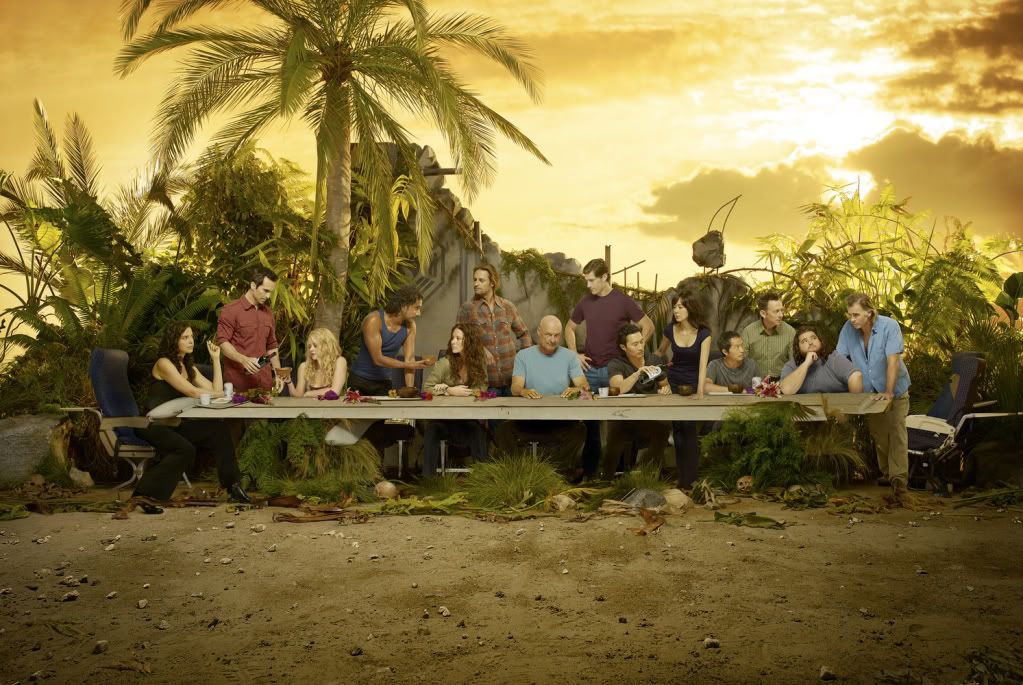
 I wouldn't have been surprised to see Ben Linus bite it, perhaps nobly, but it was sorta cool to see him paired with Hurley at the end – the most innocent, good character with the most Machiavellian. Ben often reminded me of one of my other favorite villains, Edmund in King Lear, who, sensing his own imminent demise, has a revelation and says, "Some good I mean to do / Despite of mine own nature." (5.3, 248-249) Michael Emerson has wonderful command of vocal inflection (his joke spots reading nursery rhymes as Ben are hilarious), and his performances were often brilliant and riveting. As dastardly as Ben often was, it was hard not to admire his style and skill. And just when we thought Ben might be good, he zig-zagged back. Despite his villainy, he becomes quite sympathetic in a couple of episodes, notably 5.12 "Dead is Dead" where he faces (what he believes to be) his dead adoptive daughter, Alex, and 6.7 "Dr. Linus." That's quite the feat. I could definitely imagine him dying, but as Samuel L. Jackson told George Lucas about Mace Windu, "Don't let him go out like a punk."


