Occasional blogging, mostly of the long-form variety.
Showing posts with label Howard Kurtz. Show all posts

Monday, November 03, 2008

Take the GOP Talking Point Quiz!

You've seen Howard Kurtz cheerlead "the Surge" in defiance of the facts. You've seen him cover for Michelle Malkin's campaign of hatred against a severely-injured 12-year old boy. You've seen him quote Malkin to push a false equivalency about hatred on the left and continue to ignore the eliminationist rhetoric commonplace on the right. You've seen him write a puff piece on Malkin. Oh, then there's all the Obama non-scandal scandals that could have been made into a bigger deal. So here's a little quiz. How many right-wing talking points can you spot in his write-up on Barack Obama's infomercial?

It was like a well-produced "60 Minutes" report on the struggling middle class, if those who are struggling all happened to live in swing states. Call it "30 Minutes."

Obama did the voice-over, playing the role of correspondent, and the goal, of course, was to intertwine his personal story with the difficulties and aspirations of ordinary Americans whose votes he needs to put him over the top.

The Obama infomercial last night began in a faux Oval Office -- the desk, the tree behind the windows, the flag pin on the man who once disdained them -- that to my eye seemed a tad presumptuous. It was, naturally, designed to get you to envision him as the 44th president.

The mini-portraits -- the injured tire worker in Missouri, the retired railroad worker in Ohio, the widow with two jobs in New Mexico, the teacher in Colorado, the auto worker in Kentucky -- were polished and, at times, quite moving. Obama wants it known that he is fighting for them.

What also worked was depicting Barack in people's living rooms, talking about what he wants to do for them. (Although how did the tax cuts suddenly move down from people earning $250,000 to those at 200K?)

What didn't work were the brief tributes by senators and governors -- who might as well have been touting the slice-o-matic -- and the snippets of Obama's Greek column convention speech. We've already seen that, and it was out of sync with the tone of the ad.

Which brings me to the final three minutes. The idea of moving from the safety of a videotape to a live event was inspired. But doing it in a cheering Florida stadium with Obama going to the overblown rhetoric and vowing to "change the world," not so much. The whole idea of the show was to bring Obama down from the clouds and into the street. The big rally came close to canceling out the man-of-the-people image so carefully constructed in the previous 27 minutes.

Still, the show was on CBS, NBC, Fox and four other networks -- the biggest such splash since Ross Perot's pie charts -- and it probably helped at the margins. Even if it didn't, I don't get some of the advance criticism that the show would boomerang because of its excessive nature. No one had to watch. They could always switch over to "Pushing Daisies" on ABC.

If the press were inclined to hammer the Democratic nominee for buying the election after blowing off public financing, the infomercial would be Exhibit A. But the press is giving him a pass on the issue.

One other observation: Has Obama been watching too many Palin speeches? He kept talking about "workin' families" and was in full g-dropping mode.


How many GOP talking points did you spot? I see at least four. In paragraph 3, Kurtz writes about a "faux Oval Office." Other commentators did as well, which I suppose is fine, although you'll notice it's all brown wood versus the white of the Oval Office, and I don't think appearing in an office is the slightest bit remarkable for a political ad. But Kurtz calls this move "a tad presumptuous." Gosh, we've never heard that one before, have we? It's awfully "presumptuous" for Obama to think he might actually be elected somehow? Kurtz also accuses Obama of 'disdaining' wearing a flag pin. This is a common right-wing talking point, and Kurtz repeating it is unconscionable bullshit. After the flag pin idiocy was finally pretty much dead back in July, Kurtz repeated the smear by agreeing with a disingenuous National Review piece that resurrected it yet again. At the time, rather than blogging about it, I actually wrote Kurtz a detailed e-mail with links (such as this one) debunking the claims. He never replied, and that's fine. But he really, really should know better. At best, it's a contentious charge that shouldn't be presented as fact, but the truth is it's an ugly smear. Yet he clearly has no compunctions about tossing it off, facts be damned.

In paragraph 5, Kurtz expresses confusion about Obama's tax plan. I'm sure it's just a coincidence that Sarah Palin and other McCain surrogates have been making this attack for the past week or so. Seriously, how can Kurtz possibly be ignorant on this subject? Biden did make a misstatement within the past two weeks his critics seized upon, but the campaign immediately corrected it, and it's not as if Obama's tax policies are some big secret. Obama's described them in at least two debates, and his nomination speech, among other places. (Update: Per CNN, Biden didn't even really misspeak, unless we define "misspeak" as "saying something accurate that an opponent can quote in misleading way." McCain's just lying.) Here's one chart that explains the Obama-McCain differences, and a Hilzoy post that goes in more depth. Basically, Obama is raising taxes on folks making over $250,000 a year. Those making between $200,000 and $250,000 will not see their tax rate move much at all. Those making less than $200,000 will see a tax break – and it's a larger break under Obama than McCain, who is giving bigger breaks to the wealthiest Americans (like his wife) than even George Bush did. Thus, as Obama has often said, roughly 95% of Americans will not see their taxes go up under an Obama presidency, and most of that number will see a tax break. Seriously, how could Kurtz not know this, or not research it to refresh his memory? Does Kurtz just have a crappy memory, does he not want to do research to solve his confusion, or does he just take most of his cues from Republicans attacking Obama?

In paragraph 6, I'd say Obama's decision to cut to his nomination speech was an effective choice. It reminded people of the power of the speech, and it reinforced that he's been saying this stuff for a while now. Kurtz is free to disagree on that. But mentioning the Greek columns is just pathetic. As you may remember, right-wing blogs were obsessed with this, even though Bush accepted his nomination in 2004 in front of Greek columns. Apparently Kurtz missed the many mentions of that hypocrisy on liberal blogs and establishment outlets such as The Politico, or the terms "nomination speech" or "convention speech" just didn't appeal to him.

As to the public financing charge, while it's a conservative talking point, it's a fair criticism up to a point. Still, Kurtz has never to my knowledge pointed out that McCain has violated campaign finance laws (Talking Points Memo, a blog Kurtz typically reads, has done numerous posts and at least one video on this subject). I don't remember Kurtz hammering the Republican Party for its massive spending advantage in 2004, or criticizing how the GOP hit Kerry with the Swift-Boat ads at a point in the campaign cycle when Kerry's funds were curtailed by finance laws. Kurtz buds Mark Halperin and John Harris wrote a whole book extolling the virtue of Rove's sleazy, win-at-any-cost, bigger war chest brand of politics. Now, Kurtz isn't too blame for their book, of course, but he shares many of their views, and the whole gang are pretty selective when it comes to fairness.
Kurtz is entitled to his other opinions. The Florida rally wasn't live out here in California, so its special nature was lost on me. I don't have an issue with the old speeches and the new rally being intercut with the informercial stuff, which also intercut Obama speaking directly to the American people, mini-docs on families, and Obama listening to and talking to American citizens. But hey, Kurtz is free to feel differently.

All that said, if Kurtz isn't aware of what he's shilling, boy, he's been duped, and if he is aware, it's even more shameful. I think it's a mixture of both. In any case, while Kurtz has his moments, his blog's main virtue is as a conservative blog round-up, but Kurtz still affects a persona of being fair and balanced, ample evidence to the contrary. Once again, he's adopted a right-wing framing and legitimizes bullshit.

(Oh, and Pushing Daisies is a good show, but I don't think even Ned could resurrect McCain's campaign at this point.)

(Cross-posted at The Blue Herald)

Thursday, July 10, 2008

Skippy and the Mystery of the Missing Journalism

(A strange but familiar tale - with pictures!)


(AP photo)

Economic issues remain a top concern for voters this year, unsurprisingly enough. Back on Friday, June 20th, Barack Obama held an economic roundtable with 16 Democratic governors. It received some straightforward write-ups, such as one by Ann E. Kornblut of The Washington Post for their campaign blog, The Trail. The short piece reported:

"You deserve and you need a partner in the White House and a president who understands our prosperity doesn't come from Wall Street or Washington," Obama told the group, with whom he also had dinner the night before. "We should be investing in the skills, the human capital, the education and well-being of your constituents."

The group complained widely about President Bush's stewardship of the economy and treatment of their states. Granholm [of Michigan] said 400,000 manufacturing jobs have been lost in her state since he took office. Strickland [of Ohio] said that, last week alone, he took calls from companies in his state informing him that up to 12,000 jobs are about to be lost. And Freudenthal [of Wyoming] said that, on environmental issues important to his state, he was looking forward to having a "partner for a change, as opposed to a dictator."


Also on June 20th, the AP's Nedra Pickler wrote "Play of the Day: Obama Debuts New Seal," a short piece about the modified presidential seal the Obama campaign put on the podium. Pickler's piece was widely picked up by newspapers and of course, the Drudge Report. Coverage of the seal the same day on the CNN, USA Today and Tribune sites was fairly neutral or light in tone. Meanwhile, The New York Daily News actually sought out comment from both campaigns, not on the economic roundtable itself or economic issues, but on the seal:

Asked to explain the new seal, Obama spokeswoman Jen Psaki said, "It's a mix of presidential politics and a call for hope and change."

Snarked John McCain spokesman Tucker Bounds, "I think we can all agree that we need presidential candidates that are serious enough not to play make-believe on the campaign trail."

"It's laughable, ridiculous, preposterous and revealing all at the same time," Bounds said.


Over at neocon outlet Weekly Standard, also on June 20th, John McCormack asked, "Is Obama's Great Seal Illegal?"

(Viewers of The West Wing may recall that, in fact, official seals must be altered (as Obama's was) or permission must be sought for their use, lest one risk trouble. Still, anyone passing the many merchandise carts near the National Mall in D.C. can guess that strict enforcement may not exactly be a top law enforcement priority.)

The "illegality" issue was actually brought up as well by McCain campaign blogger Michael Goldfarb. (If the timestamps for both sites are Eastern Standard Time, Goldfarb beat McCormack by 40 minutes on this angle. Neither links the other. Perhaps they came up with this angle independently, although more likely, it's a case of pass-the-meme.)

Some other outlets picked up the story, with a few right-wing blogs linking the Weekly Standard piece.


On Saturday, June 21st, Mike Allen at Politico ran a piece titled "Cindy on Newsweek cover -- Obama’s presidential seal, plus his 15-point lead over McCain … Playbook weddings." Obama's seal was not Allen's lead item, although on the subject, he wrote:

Politico’s Ben Smith says it’s for “events meant to feel presidential.”

ABC’s Jake Tapper is waiting for “a remix of ‘Hail to the Chief.’ ”

National Review’s Greg Pollowitz: “Audacity defined: Changing the seal of the United States of America and inserting the ‘O’ logo for the American flag.”

Rich Lowry, channeling Jonathan Martin: “Obama's own presidential seal. With its own Latin slogan. You can't make this stuff up.”


Tapper's brief piece was actually titled "An Audacity of Hype." On Los Angeles Times blog Top of the Ticket, Andrew Malcolm wrote "Barack Obama gets his own nifty Great Seal; all he needs now is votes," a pretty snide piece taking Obama to task for the seal, but also raising money and foregoing public funds. This is probably the standout passage:

Plus [the seal's] got Obama's website right up there too. Lord knows, he needs more donations because the poor White Sox fan from Chicago's impoverished South Side has only raised a little under $290 million so far.


(Interestingly enough, if you look at the top of the Malcolm post, you'll see a menu link to one of his previous posts that day, "John McCain may lag in money, but RNC out-raises DNC by 5 times." Ah, context.)

Also on June 21st, The Washington Post reported a tidbit, that in its entirety read:

Sen. Barack Obama's campaign raised a good deal of curiosity yesterday when it used a campaign seal that looked an awful lot like the presidential seal. Spokesman Bill Burton said the campaign wanted to give an event with Democratic governors a more formal flavor. "It seemed appropriate today," Burton said. "We'll see if it does in the future."


On Sunday, June 22nd, Democratic blogger Mark Nickolas exposed the hypocrisy of the Weekly Standard's accusations about the "illegality" of Obama's seal.

Well, it took me about 15 minutes on Google Images to discover that John McCain's (R) own caucus -- the National Republican Senatorial Committee -- uses three different likenesses of the official seal...for fundraising purposes:


(Click for a larger view.)
Nickolas closed by remarking:

Of course, the right-wing never lets their own hypocrisy get in the way of another shameless political attack. But will the media even take notice, or are they too excited about the latest game of 'gotcha' to even pay attention?

Hmm, tough one there.


On Monday, June 23rd, CNN and many other news organizations and blogs, including the AP, noted that the Obama campaign said they were dropping the seal: "That was a one time thing for a one time event." CNN's ending line was a classic of non-attribution and passing on "allegations" without evaluating them:

Many wondered whether a seal – with Latin phrasing no less - was the best idea for a candidate fighting for the working class vote and trying to fend off allegations of elitism.

Also on June 23rd, highly-trafficked site Crooks and Liars posted "Republicans Whine About Legality of New Obama Logo. Their Use of Similar Logos Doesn’t Bother Them," linking the Nickolas piece. In an update, they noted that Obama had dropped the seal.

Over at ABC, Jake Tapper wrote:

We've all had some fun at Sen. Barack Obama's "Audacity of Hype" ersatz presidential seal from last week.

And apparently the folks at Obama HQ got the message.

Tapper reported the seal being dropped, and also reported the National Republican Senatorial Committee's use of similar seals. However, he didn't credit Nickolas. (Hmm. Where did he get this?)

At Salon, Alex Koppelman covered the seal being dropped, the mockery over it that weekend, Goldfarb's illegality accusation, and Tapper's piece about the GOP seals, "an item Obama spokesman Bill Burton brought to my attention."

Over at the LA Times' Top of the Ticket, Malcolm's colleague Don Frederick reported the dropped seal and recapped some of the mockery, as did Mark Silva at The Tribune's blog The Swamp. Both linked Tapper's earlier post, "The Audacity of Hype," but missed Tapper's more recent piece mentioning the GOP seals (both Frederick and Silva appear to have posted before that Tapper post was up, and did not mention it later).

Virtually everybody, including Reuters, linked Marc Ambinder's post at The Atlantic on the affair:

I've had my fun with the Obama campaign's seal, and now that fun ends. I'm told that Obama recognizes that it was a silly mistake, that the universal reaction at Wacker and Michigan was, "Boy, was that dumb," and that they don't think the seal staging will matter to actual voters.

Does the press think Obama is arrogant? Yes. Does the seal represent arrogance? Only tangentially, actually. The worry for Obama's image managers is that it gives the press a pretext to call Obama arrogant, an example for them to add to a list of arrogant moments, and a way to distract them from what Obama is saying.

Wonkette also took a "the seal was stupid, but all this fuss is, too" attitude in "Obama Nixes Stupid ‘Great Seal’ Remake":

The national press corps is not used to covering a “confident” Democratic presidential candidate, at least in this decade. So much confidence, in fact, that the candidate won’t always bend over backwards to talk to the press, or to leak internal drama to the press! Ergo, the press has decided that Obama is arrogant. And when they saw Obama speak behind this new “great seal” of his on Friday — definitely the lamest stunt we can remember from Hopey — this confirmed to the press that Obama is too arrogant. Obama arrogantly got the message and arrogantly ditched the great seal and did some other arrogant stuff, like believe he might actually win this thing.

Whew. All right, we had our fun, but now surely that would be the end of this silly story!


(Bill Sammon)

Alas, no. Even in writing about the seal's demise, some scribes were hitting the "arrogance" theme harder than others. On June 23rd as well, Bill Sammon (background on the Bush-friendly Sammon here) wrote a piece for The Examiner, "Obama campaign drops seal on podium," notable for its snideness. In its entirety:

After days of media mockery, Barack Obama has decided to stop using a presidential-looking seal that his campaign designed and affixed to his podium on Friday.

Journalists said the seal, which features an eagle clutching arrows and an olive branch, smacks of arrogance. John McCain's camp had a field day, calling the seal “laughable, ridiculous, preposterous and revealing - all at the same time.”

The seal was conspicuously missing from Obama's lectern when he spoke to a group of women in Albuquerque on Monday. Not surprising, given how much grief Obama took from a normally laudatory press corps after unveiling the seal at an appearance in Chicago on Friday.

“What a bizarre and dumb idea,” railed NBC political director Chuck Todd. “It really feeds the arrogance narrative.”

The oversized blue seal was emblazoned with the Latin phrase “Vero Possumus,” which roughly translates into “yes, we can.” It also featured a plug for the candidate's website.

“The Audacity of Hype,” cracked ABC's Jake Tapper. “No word on whether they played a remix of 'Hail to the Chief' as Obama walked in.”

Andrew Malcolm of the Los Angeles Times observed that Obama “has decided not to wait for any of the formalities like a presidential election, an inauguration or even a nomination, which he still hasn't actually officially won yet.”

Marc Ambinder of the Atlantic magazine was the first to note that Obama would deep-six the seal.

“I'm told that Obama recognizes that it was a silly mistake,” Ambinder said. “Does the press think Obama is arrogant? Yes.”

Larry Sabato, director of the University of Virginia's Center for Politics, said the episode reinforces this media perception of Obama.

“The press corps adopts a subtext for each candidate,” Sabato told The Examiner. “Daddy Bush was 'a nice guy but out of touch.' Bill Clinton was 'smart but randy.' Bob Dole was 'heroic but too old.' Gore was 'brilliant but a fibber and a bore.' Dubya was 'pleasant but dumb.'”

He added: “Obama's subtext is rapidly becoming 'charismatic but arrogant.'”

The Obama campaign declined to comment.

It's very interesting to note what Sammon chose to clip and obscure here, isn't it, and the overall narrative he's selling? (Also, the Obama campaign had already commented to CNN. What exactly did Sammon or a staffer ask? "How do you respond to the accusation that you're arrogant?")


Ever timely, on Thursday, June 26th, high-profile Republican operative Karl Rove saw his latest Obama-bashing piece, "It's All About Obama," run in the Wall Street Journal. Rove accused Obama once again of arrogance, using the seal as his point of attack. His second graf:

His seal featured an eagle emblazoned with his logo, and included a Latin version of his campaign slogan. This was an attempt by Sen. Obama to make himself appear more presidential. But most people saw in the seal something else – chutzpah – and he's stopped using it. Such arrogance – even self-centeredness – have featured often in the Obama campaign.


(Reportedly not an actual photograph)

Enter at last our intrepid pal, skippy. In a June 26th post, "quote of the day," skippy linked a Jesse Taylor post at Pandagon on Rove's piece. As skippy noted, "the only attack the gop can muster seems to be to discuss something that obama has already abandoned." In an addendum, skippy linked Mark Nickolas' post about the GOP presidential seals.

In " the audacity of "the audacity of hype" - action alert," skippy linked the Sammon piece and posted the letter he'd written to Chuck Todd, Jake Tapper and Andrew Malcolm over their remarks. Follow the link to read the entire letter, but in it, skippy linked the Nickolas post, and asked:

as you are most certainly aware, john mccain's own caucus, the national republican senatorial committee, uses at least three different permutations of the presidential seal for their campaigns (granted they are senatorial campaigns and not presidential campaigns)…

my question to you, sir, is two-fold:

why would you characterize sen. obama as "arrogant" (or "hype") and yet not say anything about the republicans' similar use of the presidential seal, and any implied arrogance on their part?

and, do you not feel it is your duty as a journalist to report to the public this same usage of the seal by the republicans, thus providing context to events, as opposed to letting a narrative get fed into, when there is, at least in this case, no basis for that narrative to exist?

Tapper had actually covered this angle by this time (although it sure seems he or whoever tipped him off didn't credit Nickolas). However, even Tapper ran with the Obama slam first without considering, and certainly without bothering to check, the hypocrisy angle. How big a deal any of this was or is remains a matter of judgment. Still, surely skippy's letter was polite and its questions legitimate.

In "mainstream media bites roo," skippy posted the really snotty reply he received from Andrew Malcolm:

your apology is accepted. we are a political blog that writes around-the-clock about all aspects of the campaigns with attitude and hopefully some insights. apparently millions of readers are getting something from the ticket as our global ranking has surged to #133 in one year out of 100+ million. what’s yours, skippy? since there was almost universal derision over the premature presidential seal of sen. obama and his staff has been quoted as saying it was a mistake, it’s curious you defensively only ask us about it. we’re delighted to receive such attention. but if the seal was such a good idea, why isn’t he still using it?

people laughing and snickering at the seal detracts from the messages he wants to deliver, which is the professional measure of such tools.

haven’t come across sen. mccain’s pretend presidential seal yet. in fact, from our inquiries, we understand he doesn’t really like podiums, which might explain his poor deliveries at them. but if we do, you’ll see it roundly humorized on the ticket with a huge photo, especially if he attaches some faux latin motto. for now, we’re stuck with criticizing his crummy fundraising and policy inconsistencies. thanks for reading, though hope you do also get around to scanning our items not on your candidate.


(Actual reporter Andrew Malcolm, on the case)

Follow the link to read all of skippy's response, but in addition to addressing Malcolm's dismissive tone, he pointed out that Malcolm hadn't addressed the question:

what i asked was, why did you so quickly fit obama's use of the presidential seal as a prototype for a campaign logo into a narrative about obama's arrogance when mccain's own caucus uses the same seal as a prototype for a campaign logo, and yet you don't mention that.

if it is because you don't know about mccain's caucus logos, i respectfully suggest that you read the link i sent you, do some research and then publish a follow up pointing out that the republicans are doing the exact same thing the democrats are doing (though, as i said in my original letter, for senatorial campaigns and not presidential campaigns).

again, when you say "people, [are laughing]" what you really mean is "the press corps." it is my contention that the press corps should not be the final arbiter of what a candidate offers to the public, especially when the opposing candidate is offering the same sort of thing, but the press corps ignores it.

please follow the link i provided, though, again, it's for senatorial campaigns, and not presidential campaigns. but the link does provide republican faux seals based on the presidential seal.

obama is not my candidate, thank you very much. as i have said on my blog post concerning your coverage of the seal, i'm not after a fair shake for obama, i'm after a fair press corps.

(Mike Finnigan's response to Malcolm's reply deserves a gander, too.)

The pattern here should be familiar to readers of the liberal blogosphere. As when CNN's John King responded to Glenn Greenwald, to cite just one other example, when a blogger raises a concern with a mainstream media journalist, the response often is:

1) An accusation of bias, ascribing a request for accuracy, context or quality to partisanship. Responding on the merits is thus (somehow) unnecessary.

2) An authoritarian power move attacking the questioner personally, asserting a privileged position and challenging the very act of questioning the journalist. (Who are you to question me?)

It's a bullying move, and while even good journalists do field their share of undue criticism and even abusive comments, Malcolm's reply was rude, unwarranted, and unresponsive to skippy's substantive points. Not all mainstream media journalists behave this way, of course, but sadly, there's still a significant number who do.
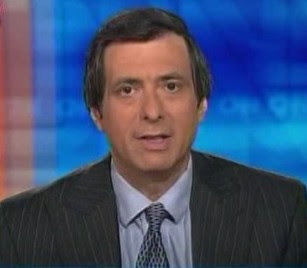

(Howard Kurtz)

We're not quite done. On Friday, June 27th, Howard Kurtz' Washington Post column "Pretzel Logic" consisted mostly of Obama-bashing pieces, as has been the case for the past four weeks or so. Kurtz, who professes independence but typically frames issues from a right-wing perspective, included three paragraphs from Rove's piece attacking Obama for arrogance and self-centeredness.

Unsurprisingly, Kurtz did not challenge Rove's premise, nor did he note that the Obama campaign had dropped the seal after one use back on Monday, nor did he note the hypocrisy angle of Republicans using modified seals themselves for similar meetings. Kurtz did quote a James Moore piece questioning whether Rove should be a pundit at all.

Still, I've lost count of how many times Kurtz has run with a right-wing smear days after it's been already debunked or at least substantially challenged by major (normally liberal) blogs. In this case, I guess Kurtz missed the Crooks and Liars piece, Jake Tapper's second piece with the GOP seals, or posts criticizing Rove's op-ed by two prominent bloggers Kurtz often features, Andrew Sullivan and Kos. On rare occasions Kurtz calls bullshit, but more often, like Mark Halperin, he spreads it.

(For more on Kurtz' hackery, see these posts on Iraq and his response to the Malkin-lead campaign against Graeme Frost. Also see Eric Boehlert on Kurtz and Malkin. I hope to have more on Kurtz in a while, but in the past two weeks alone, he's accused Wesley Clark of attacking McCain's military service and affirmed a National Review piece accusing Obama of starting the flag lapel pin nonsense himself. Both of these are questionable charges if not outright falsehoods, in addition to being colossally unimportant even if they were true. But it sure is funny how Kurtz almost always starts by quoting right-wing furor over something, and then so often agrees with it.)


(Contemplating the state of the media today,
he found himself less than enthused.)

Never underestimate the dangers of a slow news day – or week. Personally, I see nothing inherently wrong with silly side stories, or mocking candidates for foolishness. The problem is that with our mostly vapid news corps, almost all we get is gossipy bullshit. As Bob Somerby's observed, sports writers love discussing sports, but many prominent political reporters hate discussing politics. TV talking heads are the worst, taking about gamesmanship all the time, but avoiding discussion of the actual policies and their consequences. As I've written before, I think this is due to three factors. One, laziness. It's far less work, requiring no research, only a reaction and an opinion. Two, it allows journalists to stay on a "he said-she said" level that gives them cover that they're "balanced," while avoiding the fact-checking and qualitative analysis that's more work but also more likely to draw ire from at least one camp. Three, they think it's fun. Most of the Beltway crowd amount to a shallow, gossipy high school clique. I don't begrudge the idea of having fun, and some side tidbits can be enlightening or entertaining, but it's all a matter of time, place, subject and proportion. When most or all substantive discussion is shoved aside in favor of an unrelenting onslaught of crap that's both trivial and misleading, our democracy kinda suffers.

In this specific case, I don't see any problem with poking fun at Obama over the seal (a fair number of liberals did too, after all). It was an appropriate subject for a side piece or a short item, but it's fluff. Harping on it endlessly or imputing some great significance to it was ridiculous. Using it to accuse Obama of "arrogance" while ignoring that the GOP's done the same thing is negligent journalism. The bigger question is whether the press should be obsessing about a candidate's supposed "arrogance" in the first place, and in this case – as has often been the case – the press is repeating right-wing smears. If they're going to do that, at the very least, it might be nice if they identified who originated this line of attack. It's not exactly a secret that Karl Rove, Bill Kristol and other prominent Republicans have been trying to tag Obama as an arrogant elitist for several months now. But the press has repeated all of that, mostly uncritically. As we covered before over Obama's "bitter" comments, it was absurd to see millionaire pundits and millionaire candidates decrying another millionaire candidate for lacking "the common touch" (and while Obama is rich now, he lived in extreme poverty for parts of his life). But as Somerby also points out constantly, it's extremely rare for any journalist to call out the media's own culpability in this whole sideshow. Nor, as skippy's experience shows yet again, are they all particularly eager to respond to the very 'commoners' they supposedly represent when they attack politicians Democrats for being snobby elitists.

What about those pesky economic issues, anyway? There's the "dollar's 41 percent drop against the euro during Bush's term," for one example. The general rule when it comes to the corporate media is that the consequences of competing economic policies are rarely discussed, and when they are, it's rarely accurate, with bullshit going unchallenged or spread by reporters themselves. The coverage by CNN and NPR on Obama and McCain's competing tax plans was actually surprisingly good, but sadly, that's more the exception than the rule. Earlier this year in Democratic debates, both Charlie Gibson and Wolf Blitzer posed misleading or inaccurate questions about Democratic tax policies. Millionaire journalists working for corporate media never do seem terribly eager to mention the growing inequity of wealth in America and the real class warfare going on. It's a subject most Americans rarely hear anything about between the bread and circuses.

I'll hawk Paul Krugman's book The Conscience of a Liberal yet again, but an honest and accurate discussion of policies, perhaps most of all on economics and budgetary matters, will almost always favor liberals. This presidential race is no exception. Yet for every good piece in the MSM on the candidates' competing economic plans, there's several bad ones. Blogs frequently use MSM pieces as launching points, but the best liberal blogs often bring a higher level of scrutiny and a much greater willingness to call bullshit . This week alone, we have Bob Somerby examining lies by McCain and his surrogates on Social Security and taxes, and dissecting a weak Washington Post article on Social Security. Jonathan Schwarz and DDay have looked at a recent bizarre, revealing claim by McCain on Social Security. From Obsidian Wings alone this week, there's been detailed analysis of McCain's policies and statements on economics and budgetary matters: " Lie To Me, Baby," "Lie to Me Some More," "Candidates Diverge," "McCain: Deceptive Or Stone Cold Ignorant," "The "Disgrace" of Social Security," "Even More McCain" and "McCain's Economists." We'll see how much of McCain's imprudent and confused policies - and deceptive or confused rhetoric - gets covered by the mainstream press. But surely, the press should be able to muster some energy to cover McCain's plan to balance the budget:

The McCain administration would reserve all savings from victory in the Iraq and Afghanistan operations in the fight against Islamic extremists for reducing the deficit. Since all their costs were financed with deficit spending, all their savings must go to deficit reduction.

That's so preposterous I'd say it's either delusional, or insulting to the intelligence of voters, which is mighty – what's the word? – arrogant. Surely some ridicule can be spared for that. At minimum, it certainly warrants some coverage and tough questions for McCain, since it cuts to the core of two key campaign issues for him (Iraq and the economy), and its consequences are a helluva lot more dire than a friggin' podium decoration.

Within the past few days, Top of the Ticket has covered McCain's joke about killing Iranians with cigarettes, and did at least link pieces on economic proposals in a post about Obama and McCain trying to appear as "regular folks" (I'd say the economic pieces they link are very cursory, but it's not surprising they're linking stories in their own paper). Jake Tapper showed some initiative and asked the McCain campaign about what currently made Social Security a "disgrace." (See the blogs linked above for more on this.) Most MSM outlets do have their moments.

Still, I'm reminded of John Dickerson's observation once again:

One of the healthiest things about the left-wing blogosphere is its confrontational dislike of the mainstream media. There's a distinction here with the media's critics on the right. At some level, the right doesn't much like that the press exists. They don't want to fix it, they want to drive a stake through its heart. The left, on the other hand, just wishes the establishment press would do a better job. The Kos-type critique of the media is intertwined with its passion about politics. When the press gets it wrong, left-wing bloggers believe, the people are ill-informed and democracy suffers. There's respect in that anger, though you wouldn't always know it if you're the target of one of their flaming arrows. (Sometimes they apologize.)

Howard Kurtz (among others) refuses to acknowledge this difference publicly. And he, and many of his cohorts mentioned above, would be far better informed if they read (among others) the Daily Howler, Crooks and Liars, Hullabaloo, Obsidian Wings, A Tiny Revolution and Skippy the Bush Kangaroo regularly.

Wednesday, December 05, 2007

That Pesky Violence in Iraq


(Blue skies, smilin' at me...)


When I hear someone say something like this, in this case from Howard Kurtz' 11/21/07 column "Belated Reaction?":

It's official: Things are getting better in Iraq.

The New York Times says so.

I feel something like this:


Of course, I'm exaggerating, whereas Kurtz writes, "I'm being only slightly facetious here." For goodness' sake, can we please have some accurate reporting about arguably the most pressing issue of the day? Can accounts please include some essential context?

Quite a few pundits and journalists (mostly right-leaning or hawkish) have echoed Kurtz' sentiment for the past month or so. Meanwhile, right-wing bloggers such as Glenn Reynolds have been declaring victory constantly since 2003. At least Kurtz didn't invoke "surrender" or say we're "winning."

Let's be very clear. Any decrease in violence is obviously welcome. I certainly hope that trend continues. However, if you read the actual stats, and independent accounts, this simply means the situation in Iraq has gone from astoundingly horrible back to… simply horrible. The violence is still obscenely high, and the many warring factions are no closer to the political reconciliation the escalation or "surge" was supposed to allow. As we wrote in RWCW #26 back on 11/16/07:

Bush keeps moving the goalposts, and now "less violence" means success, nevermind that his own November 2005 National Strategy for Victory in Iraq defined victory as a "peaceful, united, stable and secure" Iraq (hattip to a commenter here). For a quick debunk, check out the latest of Questiongirl's Meanwhile Back in Iraq series and this Glenn Greenwald piece. There's also the more involved responses of this Small Wars Journal discussion about what actual "success" would entail, and Dan Froomkin comparing Bush's rhetoric to reality. 'Cause ya know, it must not be a horrendous Charlie Foxtrot if it's a shade less than a total disaster.

In fact, the Greenwald piece linked above dissects a Kurtz column warning the Democrats could be in political trouble for urging withdraw from Iraq (!!!), along with some rosy assessments of Iraq in denial of reality by the usual hawks. (Ugh. I need to take another look at that animation!)

Furthermore, as we noted in the same RWCW post, no one is saying that there's no progress anywhere in the whole of Iraq, although it's a common right-wing tactic to make that straw man charge. The real question is whether Iraq is actually in good straits and is anywhere close to peace and stability.

To be fair, in the more recent piece, Kurtz does add a few caveats to his "things are getting better," such as when he writes, "And let's get this straight: Americans are still fighting and dying in Iraq, and modest progress at this late date doesn't magically erase 4 1/2 years of a mismanaged war or change the public's verdict on that war." However, he instantly follows this by writing, "But if attacks and casualties are dropping, that is news, just as it inevitably would be if attacks and casualties were increasing." Sure, but it would be nice to put those in context, wouldn't it? Perhaps to write a lede that wasn't highly misleading? It would also be nice if Kurtz abandoned framing everything from the point-of-view of right-wing blogs, but no such luck:

It's hard to overestimate the impact of the Times on the media agenda, especially on the network newscasts. And because the paper's editorial page has been harshly critical of President Bush and demanding a pullout from Iraq, when it reports something positive, critics are quick to intone: Even the New York Times. . .

So the lead story in yesterday's paper--a four-column spread with pictures of a couple getting married and a thriving restaurant, with the headline "Baghdad Starts to Exhale As Security Improves"--has the feel of a turning point. Not in the war, necessarily, because who knows how long this will last, or whether Iraq's fragile government will ever be able to achieve reconciliation. But it is a noteworthy event in terms of the war's coverage.

Yes, lord knows reality is less important than the coverage. Whether "Iraq's fragile government will ever be able to achieve reconciliation" is less consequential to Kurtz, never mind that it's the central question that should be the gauge of whether any discussion of Iraq is actually serious versus bullshit. Kurtz is basically confessing right here that this is a shallow column with all the weight of a marshmallow. Does he get any slack for being a media critic, writing about media coverage? I say no, because his primary job is to assess whether the press is accurate or not. Noting the coverage has changed must be put into a meaningful context. Instead, he's mostly echoing and quoting right-wingers, hawks and other Bush cheerleaders. Some reporters write this sort of drivel simply because they want a new headline — writing "Iraq still Godawful" every day for several years doesn't appeal to them or their editors, true though it may be. On one level, Kurtz is just filling a column. But his starting point is almost always right-wing blogs, and here he's highly misleading. Iraq is simply not a glass half-full situation, unless one notes that the glass is half-full of blood.

Let's look at his column and the context Kurtz ignores first. From the NYT's "U.S. Says Attacks in Iraq Fell to Feb. 2006 Level," Kurtz quotes the lede:

The American military said Sunday that the weekly number of attacks in Iraq had fallen to the lowest level since just before the February 2006 bombing of the Shiite shrine in Samarra, an event commonly used as a benchmark for the country's worst spasm of bloodletting after the American invasion nearly five years ago.

There are other sections about the significant drop in reported violence (and you can read the article for yourself; it's short), but the NYT piece also says:

The data released Sunday cover attacks using car bombs, roadside bombs, mines, mortars, rockets, surface-to-air missiles and small arms. According to the statistics, roughly 575 attacks occurred last week.

That is substantially fewer than the more than 700 attacks that were recorded the week that Sunni militants set off a wave of sectarian violence in Iraq by blowing up a Shiite shrine in Samarra in February 2006. And it represents a huge drop since June when attacks soared to nearly 1,600 one week.

American officials said other measures indicated that civilian deaths had dropped. Rear Adm. Gregory Smith, a spokesman for the command, said civilian deaths had dropped by 60 percent since June…

To be sure, the level of violence in Iraq is still high. Even as military officials announced the figures, Iraq had one of its deadliest days in weeks, with at least 22 people killed. Among the killed were nine civilians in Karada, a mixed neighborhood in central Baghdad, when a car bomber rammed a convoy carrying Iraq’s deputy finance minister. The official was not hurt, but a guard was among the wounded.

Also on Sunday, three children were killed and seven were wounded in Baquba, to the north, in an explosion in a small garden where American soldiers were handing out candy, ballpoint pens and soccer balls. Three American soldiers were also killed. Their names were not released.

Some experts said the data indicated a downward trend in violent attacks, albeit from relatively high levels — 2006 was one of the most violent years in the war.

The most pressing issue, they said, was how to keep them down and reduce violence further given the failure of Iraqi leaders to achieve reconciliation…

Military officials stressed that attack levels might fluctuate in the future and that it was too soon to say that the United States had turned the corner in Iraq. Past periods of relative calm in Iraq have also been shattered by violence. And American officials have complained that the Iraqi government is not taking the opportunity in the current lull to attempt serious political progress.

“While violence is turning in the right direction, a tough fight remains ahead and progress will be uneven,” Admiral Smith said. “Violence is still too high in many areas of Baghdad and across Iraq.”

The article ends on a hopeful note, but again, you can read it for yourself and judge how accurately Kurtz conveys its content. As for the article itself, it presents much more nuance than Kurtz, but comparing the current level of violence to the absolute worst points hardly gives an honest picture.

From the second NYT article Kurtz features, "Baghdad’s Weary Start to Exhale as Security Improves," he quotes:

The security improvements in most neighborhoods are real. Days now pass without a car bomb, after a high of 44 in the city in February. The number of bodies appearing on Baghdad's streets has plummeted to about 5 a day, from as many as 35 eight months ago, and suicide bombings across Iraq fell to 16 in October, half the number of last summer and down sharply from a recent peak of 59 in March, the American military says.

As a result, for the first time in nearly two years, people are moving with freedom around much of this city. In more than 50 interviews across Baghdad, it became clear that while there were still no-go zones, more Iraqis now drive between Sunni and Shiite areas for work, shopping or school, a few even after dark. In the most stable neighborhoods of Baghdad, some secular women are also dressing as they wish. Wedding bands are playing in public again, and at a handful of once shuttered liquor stores customers now line up outside in a collective rebuke to religious vigilantes from the Shiite Mahdi Army.

It's a very different piece, with a more human, personal angle, and it's heartening to know that one of the families profiled "can joke because they no longer fear that the violence will engulf them." However, putting these two 'upbeat' articles together, the "drop" in violence still means roughly 575 attacks per week, 5 bodies appearing on the streets of Baghdad every day, 16 suicide bombings per month, car bombs every few days, sporadic horrific attacks where dozens of innocent people die (including children), continued troop deaths, many Iraqis afraid to leave their neighborhoods during the day and most afraid to go outside at night. How much press did the Virginia Tech shootings get in America? Can you imagine if even a fraction of the type of violence typical to Iraq was occurring in the United States?

Again, a decrease in violence is obviously a good thing. But it also seems pretty obvious that the violence remains extremely high. Additionally, when the second article says that "Mrs. Aasan said she was thrilled and relieved just a few days ago, when her college-aged son got stuck at work after dark and his father managed to pick him up and drive home without being killed," it's quoted as a sign of progress. We can all be grateful that the Aasans are all right, but that is not an anxiety one would have in a peaceful country. I really do hope the days are gone when merely going to the morgue to claim a dead loved one would result in one's own death, but it's hard to forget a Fresh Air interview earlier this year and the line, "Today, in Iraq, to die naturally is considered a blessing."

I find Captain Ed's reaction to the NYT coverage as quoted by Kurtz interesting (perhaps it's where Kurtz picked up his framing, since Ed's post is named "Progress Must Be Real If The Gray Lady Reports It.") Ed feels that the NYT "uses the hoary device of individual anecdotes to temper the news, as if to assert that even success cannot be enjoyed if even one individual feels fear of entering a specific neighborhood." I'd argue that actually, with the second article, the NYT is asserting things are better by anecdote, although overall the situation remains horrible. As for his contention that "One wonders how many Times execs wander freely through the Bronx at night, or even in the daytime," it's not a bad quip, but it's a straw man argument, as is his claim that the NYT is using a "no fear by anyone anywhere" standard. Kurtz also quotes a post at Red State by Pejman Yousefzadeh, who muses, "Kinda makes you wonder why it is that the 'reality-based community' hasn't taken much notice of these improvements." I know, really. Down to only 575 attacks per week! Break out the champagne, you dirty hippies!

Then there's the passage Kurtz uses from Christopher Hitchens, who's more skeptical about progress:

I am not at all certain that any of this apparently good news is really genuine or will be really lasting. However, I am quite sure both that it could be true and that it would be wonderful if it were to be true. What worries me about the reaction of liberals and Democrats is not the skepticism, which is pardonable, but the dank and sinister impression they give that the worse the tidings, the better they would be pleased. The latter mentality isn't pardonable and ought not to be pardoned, either.

"Go to hell" is among the more polite responses this merits. Perhaps somewhere in America, a tiny minority of twisted people actually exist who long for Iraq to grow worse. I certainly don't know any anti-war people that fit that bill. No one on the national stage, no prominent liberal or anti-war blogger holds such monstrous views. We're the bleeding hearts, remember? Get your offensive stereotypes straight! We decry needless death and destruction. Many of us opposed this debacle to begin with, and others have since come to their senses. I'm rather sick of conservatives and hawks projecting their own callousness and slandering the folks who got it right and still have it right. They can't even take ownership of their own mayhem, and stoop to ye old straw man-ad hominem combo, excoriating their perceived foes for evil views they don't actually hold. If you want to talk about inhumanity and a lack of commitment to freedom and democracy, besides Bush repeatedly laughing and joking about Iraq, there's the imperialist views of Norman "Iraqis' views don't matter" Podhoretz and the respectful approach of Rush "phony soldiers" Limbaugh. It makes me think of a great Digby post (previously linked here) about similar scolding:

I love these lectures and feelings of "disgust" coming from people who apparently still maintain that it was perfectly fine to ignore international law and invade a country for no good reason and turn it into a chaotic hellhole. No moral culpability required for that, no admission of guilt, but lots and lots of sanctimonious posturing about how we will have blood on our hands if the US admits its mistake and withdraws. The obtuseness of that position takes my breath away. We already have so much blood on our hands that it's dripping into everything we touch.

Kurtz does later quote a decent DailyKos entry on how many lulls in violence there have been in the past, and quotes John Murtha briefly, but his column overall is severely lacking.

Let us turn to some other sources, shall we, for that context thing? A McClatchy account from 10/31/07 notes the decrease in troop fatalities and reported civilian deaths, but adds:

Even so, the capital remained a dangerous place. While car bombs declined to 15 from September's 19, the number of blasts caused by improvised explosive devices increased by more than 60 percent, from 30 to 48. The number of people injured in explosions in the capital rose 19 percent, from 378 in September to 450 in October, according to the McClatchy statistics, which are gathered daily from police and other official sources, but which probably undercount violence in the capital…

There's no consensus about why violence has declined so rapidly in the capital or why U.S. combat casualties have dropped so dramatically.

Bush's backers obviously attribute all decreased violence to the "surge," and likely it plays a significant role, along with a number of cease-fires. But the article also notes that "Some residents believe the drop in Iraqi deaths in the capital has happened because so much ethnic cleansing has left simply fewer people to kill."

Similarly, a fairly upbeat BBC account, "Is Iraq getting better?" (11/11/07), notes the downturn in violence as well and closes by saying "there can be no denying that many Iraqis, especially in Baghdad, are more optimistic now than they would have dared believe possible a year ago." Yet it also observes that:

Everybody agrees that military and security measures on their own can only go so far if not buttressed by economic, social and political progress…

The Americans and Iraqi government are well aware of the need to follow up with services - electricity and water supplies are still sporadic - and job-creation schemes if they are to hold the ground they are clearing.

But virtually none of the key pieces of required legislation has yet been passed by a fractious Iraqi parliament which has been wracked by factional disputes.

There is still no shared and agreed vision of Iraq's future. Kurds and some Shias want a loose, federal arrangement, while Sunnis and some others want a stronger, more centralised state.

It matters. To which Iraq are people signing up with the security forces swearing allegiance?...

Despite the progress in the security arena, the story is far from over. The casualty figures are down, but people are still being killed every day.

London's Financial Times notes the reports of decreased violence, but also observes:

While the military displays cautious optimism, however, some experts are less convinced. Anthony Cordesman, a defence expert at the Center for Strategic and International Studies, said the statistics did not capture the true picture of violence in Iraq.

“The [numbers] that the coalition counts tend to omit most of the violence in the south, which is Shiite-on-Shiite, and lower-level tensions between Arabs and Kurds. It also doesn’t seem to count Sunni-on-Sunni unless it is al-Qaeda versus anti-al-Qaeda.”

How reliable are the figures? Anecdotal evidence supports a downturn in violence, but Petraeus' testimony was at times misleading, and earlier Pentagon numbers did not count "1) Sunni on Sunni violence. 2) Shi’a on Shi’a violence 3) Car bombs 4) Getting shot in the front of the head." Of course, this is the same Pentagon that left 20,000 troops with brain injuries off the official wounded list and has been reluctant to report suicide rates among returning troops (which opens a whole host of other issues).

There's also a “wave of violence that’s gone largely unreported lately against women in Iraq.”

Meanwhile, McClatchy does a daily tally of violence in Iraq and Questiongirl's Meanwhile, Back In Iraq series chronicles a number of developments.

Just yesterday, NPR ran not one but two stories about Iraqi refugees returning from Syria (we've covered the severe refugee crisis before).

Also yesterday, Juan Cole wrote a splendid piece for Salon summing up the situation, "Why Bush's troop surge won't save Iraq." It's worth reading the whole thing, but as Cole writes:

[Senator Jim] Webb was correct to point out that the only truly good news to come from Iraq would be good news regarding the political landscape. In recent days, parts of northern Iraq have been invaded by Turkey, an ally of the United States. In Baghdad, Sunni members of parliament staged a walkout to defend their leader, whose bodyguards were implicated in fashioning car bombs. Proposed legislation reducing sanctions against Sunni Arabs who once belonged to the Baath Party nearly produced a riot in parliament. Meanwhile, Britain and Australia, among Bush's few remaining allies with combat troops in Iraq, are planning to depart in 2008, raising questions about security in the key southern port city of Basra, the major route for the country's lucrative oil exports.

What the recent publicity about the "success" of the troop surge has ignored is this: The Bush administration has downplayed the collapsing political situation in Iraq by directing the public's attention to fluctuating numbers of civilians killed. While there have been some relative gains in security recently, even there the picture remains dubious. The Iraqi ministry of health, long known for cooking the books, says that a few hundred Iraqis were killed in political violence in November. However, independent observers such as Iraq Body Count cite a much higher number -- some 1,100 civilians killed in Iraq in November. They reported that bombings and assassinations accounted for 63 persons on Saturday, the first day of December, alone.

Indeed, the "good news" of a lull in violence is relative at best. In fact, Iraq's overall death rate makes it among the worst civil conflicts in the world. Even if one accepted the official Iraqi government statistics, the average number of Iraqi deaths directly attributable to political violence in the past three full months has been around 700 per month. That pace, if maintained, would work out to about 8,400 deaths a year. (I am citing the kind of war statistics produced by passive information gathering such as in newspapers. Using a more comprehensive public health study such as the one that appeared in the Lancet last year, which takes into account deaths from criminal violence and insecurity generally, would result in much higher numbers.) In all of Northern Ireland's troubles over 30 years, only about 3,000 persons are thought to have been killed. In Kashmir since 1989, some 40,000 to 90,000 persons have been killed in communal and guerrilla violence; if we take the higher number, that's roughly 419 killed per month. Perhaps only Somalia and Sudan witness killings on that scale, and no one would say that "good news" is coming out of either of those places.

The current "good news" campaign from the Bush administration regarding the troop surge is only the latest in a long history of whitewashing the war since the 2003 invasion. First, Secretary of Defense Donald Rumsfeld denied that there was massive looting following the fall of Baghdad. Then he denied that there was a rising guerrilla war. Then, after the Grand Ayatollah Ali Sistani maneuvered an unwilling Bush administration into holding relatively free elections, the victory of Shiite fundamentalists close to Iran was obscured by the "purple thumb" good news campaign. That is, the administration focused on the democratic process and relative success of the voting, diverting attention from the bad news that the Supreme Council for Islamic Revolution in Iraq had taken over.

Later, it was good news when the Iraqi parliament produced a theocratic constitution with all the weaknesses of the U.S. Articles of Confederation, even though all three Sunni-majority provinces rejected it in the subsequent referendum. What was in the constitution was not important, only that it existed. The Bush administration has heralded any number of such "milestones" reached, but not whether they led to worthwhile results.

Obscured by these "milestones" is that the orgy of violence in Iraq has displaced 2 million persons abroad and another 2 million internally, and left tens of thousands dead. But now the "good news" is that the guerrillas appear not to have been able to keep up the pace of violence characteristic of 2006 and early 2007, even if the pace they maintain today is horrific.

Ah, context! There's no reason Howard Kurtz couldn't provide the same. There's nothing wrong with noting a decrease in violence, but accounts such as Kurtz' inflate a bit of good news to present a grossly distorted picture that adds to the bullshit rather than diminishing it.

The Bush administration and their backers already produce bullshit at an astonishing rate without help. They all but refuse to accurately describe the situation in Iraq, but reporters don't need to do the same. Given the Bush administration's deliberate obfuscations, it's all the more crucial that they don’t. Without honest assessments, it's extremely difficult to achieve any of the meaningful progress in Iraq the Bushies claim they want.

But good news, citizens! Another glorious victory means the war has moved appreciably closer to its end!


(Cross-posted at The Blue Herald)

Monday, October 22, 2007

The Song Remains the Same for Howard Kurtz

Last week, Howard Kurtz downplayed his pal Michelle Malkin's crazy and vicious smear campaign against twelve-year old Graeme Frost and his family, toddler Bethany Wilkerson and her family, and whoever else dared to challenge her blatant inaccuracies and complete lack of decency. This past Friday, in "CHIP On Their Shoulder," Howard Kurtz demonstrated both what's not so bad about him and what's infuriating and contemptible.

First, let's note what Kurtz does right in this online column. He covers the under-covered story that Senate Minority Leader Mitch McConnell's office had a hand in this smear campaign, and lied about it. Kurtz also links Greg Sargent, who asks, "When are the cable nets and the Capitol Hill press and the pundits going to dig into the role that GOP Senate leader Mitch McConnell played in pushing the smear of the Frost family?" Kurtz also quotes Digby, one of the best writers on this whole debacle. All of that is to his credit, as is his general pro-blog bent.

Now to his faults. He leads with this:

On the left, commentators are really ticked off over what they view as the smearing of a 12-year-old boy.

On the right, pundits say they are raising legitimate questions about a family that the Democrats trotted out as a symbol of the child health insurance program.

The House, as expected, failed to override Bush's veto of a $35-billion expansion of the program yesterday. But the real emotion seems to surround Graeme Frost, the brain-damaged boy who delivered the Democratic radio address about the S-CHIP program.

You will not be surprised to learn that I am not in favor of beating up on young kids. But I also don't think it's unfair for opponents to question a family's income qualifications for a federal program after the other side has put the family forward as a symbol of why the program is needed.

The problem is that some of the early attacks on the Frost family (the parents have already chatted with Keith Olbermann) were misleading. Yes, the kid goes to a private school, but on scholarship. Yes, the father owns a home, but he bought it in 1990, in a rundown neighborhood, for $55,000.

Such hedging isn't that surprising from an entrenched media figure trying to do "straight" reporting without pissing anyone off, specifically the right-wing. Kurtz won't state that smearing actually occurred, but that it's 'viewed' that way. That's not too bad. But Kurtz glosses over that for those "misleading" attacks (notice the passive construction he uses), the right-wingers made no effort to fact-check them. Kurtz also glosses over the viciousness of those attacks, declining to show any examples. Keep in mind that he didn't write this in print, but in his online column, where he doesn't have a length requirement (the blog versions of his columns are often longer). I'd say this is gutless "he said-she said" coverage and whitewashing, but still not godawful.

Later on, he quotes Digby at some length (again, that's to his credit):

Journalists will say that using political 'oppo research' is a legitimate way to get tips, as long as they always check them out before they run with them. Fair enough. But what they fail to acknowledge is that this allows the best story-planters to set the agenda for coverage, and the best story-planters are those who know how to get the media interested.

And after watching them for the past two decades very closely, I think it's obvious that what interests the media more than anything is access and gossip and vicious little smears piled one atop the other. And why not? They are easy to report, require no mind numbing shuffling of financial reports or struggling through arcane policy papers. In fact, the press has made a virtue of the simple-mindedness by calling what used to be known as gossip, 'character issues', which are used to stand in for judgment about policy.

The press, therefore, will go to great lengths to protect the people who give them what they crave, most of whom happen to be Republicans since character smears are their very special talent. There was a reason why Rove and Libby used 'the wife sent him on a boondoggle' line. Stories about Edwards and his hair and Hillary and her cold, calculating cleavage are the coin of the realm. Why we see so little of the same kind of feeding frenzies on the other side isn't hard to fathom. Nobody is spoon-feeding them to the press with just the kind of cutesy meanness they prefer.

Kurtz' response in the next paragraph is:

I agree that leakers often get to set the story line, but I also know that Democrats are not unfamiliar with the practice. (Remember the Bush DUI leak just before the 2000 election?) And those who leaked information about domestic surveillance, Abu Ghraib and secret CIA prisons also had an impact.

Where to begin? I did a quick search and found that Paddy at Cliff Schecter's blog beat me to a response. As he writes:

I'm only going to say it once Howie, since I think any other attempt at explaining it to you would be wasted breath-

The first example is of rabid monkeys flinging poo at a wall trying to see what will stick and/or smear.

The second example is of reporters digging up truths that are harmful, whether to a nascent presidency or our country.

The fact that you can't tell the difference explains it all.

Digby also responded, taking on the DUI issue specifically, but first dissecting Kurtz' ridiculous paragraph:

Can everyone see what's wrong with that picture? I knew that you could.

It's hard to believe but Kurtz seems to be implying that those who leaked the illegal wiretapping, Abu Ghraib and secret CIA prisons stories were Democratic operatives who were feeding the press a deliciously, gossipy storyline for political gain. Maybe he knows something I don't know, but to compare the whistleblowers who blew the lid off of Abu Ghraib and the others with those smarmy little staffers in Mitch McConnel's office who trafficked in smears against the Frosts says a lot about how the Village views "leaks."

Glenn Greenwald also weighed in on the same paragraph, writing:

For the moment, leave aside the fact that Kurtz is so desperate to defend Republican operatives that he just recklessly asserts things as fact here even though he has no idea whether they are true. Kurtz has absolutely no idea who leaked the NSA story to Jim Risen and Eric Lichtblau and whether they are "Democrats." The same is almost certainly true for Dana Priest's sources for her CIA "black site" story, whom Priest described as "U.S. and foreign officials" and "current and former intelligence officials and diplomats from three continents" -- not "Democrats."

Worse, the Abu Grahib whistleblower was U.S. Army Sgt. Joseph Darby, not a Democratic Party operative. And the Bush DUI story was uncovered by a local reporter in Maine through actual old-fashioned reporting -- pursuing a copy of the arrest record and interviewing the arresting officer. But Kurtz, like most Betlway journalists, has such a compulsion to assert equivalencies that he literally just invented facts -- Democrats leaked these stories -- in order to support his "balance" mantra. And this is CNN's and the Post's "media critic."

But far more significant than Kurtz's willingness to invent facts is that he sees no distinction between (a) revelations that the Bush administration is torturing detainees, holding them in secret prisons, and spying on Americans in violation of the law and (b) what Digby described as "stories about Edwards and his hair and Hillary and her cold, calculating cleavage." Digby's whole point was that Republicans dominate political press coverage because they feed vapid, slothful, tiny-minded "journalists" with vapid, tiny-minded, malicious gossip that reporters eat up and spew out in lieu of reporting on actual matters of substance. To rebut Digby's claim, Kurtz argued that Democrats do it, too -- and then cited the leaks about torture, secret prisons, and warrantless surveillance as his proof.

Of course, none of this is that surprising, considering that during his online chat on Monday, 10/15/07, Kurtz tried to equate The Baltimore Sun showing a photo of the Frost's home with Michelle Malkin publishing "their address and telephone number on her blog so more people could harass them" (also noted at FireDogLake). Kurtz handled this affair like a GOP hack, not an objective (and fearless) journalist.

I wanted to wait to finish this post until after Kurtz' online discussion today, to see if he fielded any questions or comments on the matter. I submitted the following two, although the chat was already underway and Kurtz may never have seen them:

Dear Howard, thanks for covering the Frost attacks and the role of McConnell's office in them. However, I felt you glossed over the character of those attacks. The initial Free Republic post that so many right-wing bloggers and McConnell passed around was full of inaccuracies, falsehoods and silliness (is this the idea of a scholarship to private school so inconceivable?). The Frosts would have been eligible under SCHIP even under Bush's version of the plan. Malkin, Reynolds and the gang and McConnell all rushed in without bothering to verify anything. Many of the attacks were vicious and personal, such as calling the Frost parents "spoiled brats" and wishing to see them 'destroyed' or 'hanged.' It would have been easy to say "we all feel sympathetic to the Frosts, but this is a bad program because…" They didn't. While you provided some good details and links, a reader would be unaware of the true venom of these attacks reading your piece alone. Thanks.

And:

Howard, I've read your work for the past three-some years, and while I appreciated you covering the attacks on the Frosts, I was really dismayed to read this:

"I agree that leakers often get to set the story line, but I also know that Democrats are not unfamiliar with the practice. (Remember the Bush DUI leak just before the 2000 election?) And those who leaked information about domestic surveillance, Abu Ghraib and secret CIA prisons also had an impact."

Do you see the false equivalencies here? As far as we know, Democrats were not responsible for all of those leaks, if any. Shouldn't the standards for the newsworthiness of any "leak" be 1) it's true and b) it serves some public need? (Obviously you don't disclose troop movements, operational details, etc.) Warrantless eavesdropping violates the Constitution, Abu Ghraib violated our prohibitions against torture and standards for due process and fair treatment, as do secret CIA prisons. All of these have also severely hurt our image abroad. Exposing those should not be a matter of partisanship. How are those possibly comparable to, say, the swift-boating of Kerry, the attacks on the Wilsons, or the sliming of severely-injured, 12-year old Graeme Frost and his family? Sure, questions can be raised, but all of those attacks contained lies, inaccuracies and an extreme viciousness. As citizens, we depend on the media to fact-check and call BS. Passing on unverified and inaccurate oppo research may fill a column or air time, but it hardly serves the public. As I recall, you've made similar distinctions yourself before, and you were right to do so. Thanks.

Again, I can't fault Kurtz for not responding to my specific submissions, since he may not have even seen them. I dashed these off quickly, and the second one is quite long, although many WaPo online discussions will feature a few of that length. I just wanted to provide context to help avoid another glib dismissal. However, since I read his chats almost every week, I know that when the big liberal blogs raise some question about Kurtz' reporting, it almost always makes it to the chat in some fashion. I would be really surprised if no one offered a similar comment or question, but the chat didn't feature a single challenge on his handling of the story.

I've read virtually every piece Kurtz has written in the past three or more years (although I've only caught clips of his CNN show Reliable Sources). My take on Kurtz is that he leans conservative (his wife is "Republican consultant and commentator Sheri Annis") and does make some effort to be fair, but he's blind to many of his faults and biases. That's the most charitable take. I do give him credit for chatting with readers nearly every week, and often responding to some tough questions. At times he's even apologized for errors. Every so often he produces a splendid column, as when he took on the ridiculous Murdoch-driven Obama madrassa story, and actually did so ahead of the curve.

However, much of the time he's playing catch-up, and his starting frame of reference is almost always right-wing blogs and publications. He sometimes challenges right-wingers, but generally not that vigorously and has spread false claims by them unchallenged. He's run with BS stories spread by Malkin and others that were debunked by the major liberal blogs days before he posted his column. All in all, his blog isn't bad as a conservative reader's round-up, with a sprinkling of liberal pieces as well. He's a sampler more than a debunker, although he seems to have a double standard for what outrages him (no one who reads conservative blogs as regularly as he does could be ignorant of how violent rhetoric is commonplace and even encouraged by them in a way that is just not the case for the liberal blogosphere).

Kurtz's sporadic quality work has been enough to make me feel disappointed in him rather than completely writing him off. I would like to think he's redeemable, and with the chattering class, I generally like to give credit where deserved and condemnation where justified. (I also feel compelled to dissect bullshit.) Still, others such as Scott Horton have savaged Kurtz on several occasions, and with good reason. Kurtz has his moments, but he's shown a double standard several times now, as well as a stunning unwillingness to call bullshit on the right-wing. If he were a GOP operative, his rationalizations and false equivalencies might not be so maddening, but he's a supposedly objective media critic at one of the nation's best, most prestigious newspapers. Film critic Pauline Kael sagely observed that Hollywood confuses what people want with what they're willing to settle for. The same dynamic holds true for most politicians and certainly most pundits of "the Village." Given that moral vacuum, it's all the more important for bloggers and activists to keep up the pressure, especially with pundits too gutless to condemn sleazy attacks on a severely-injured seventh grade kid.

(Cross-posted at The Blue Herald)