Occasional blogging, mostly of the long-form variety.

Wednesday, November 30, 2005

The Original Ending Was Just Too Downbeat


Who's your target audience?

Tone is just so important.

One of the most brilliant internet creations I've come across in a while is the following fake trailer, which sells Stanley Kubrick's The Shining as a quirky family comedy-drama. Cringe, marvel, and cringe again - because as with Network, don't think the powers-that-be in Hollywood haven't thought of it.

(One of the music cues comes from Thomas Newman's score from The Shawshank Redemption, often cribbed for use in trailers… the ending narration and music is based on the Around the Bend trailer... but the chirpy opening is fantastic as well.)

Monday, November 28, 2005

Who Voted for Torture?

Congratulations yet again to John McCain and the vast majority of Republicans in the Senate who voted against torture (every Democrat did). If you're like me, you wondered, who were the nine senators for voted according to Cheney's wishes to allow torture? Here's the list... all Republican, and some heavy hitters.

The bill is of course not out of the woods yet, with the Pentagon, the House, and Cheney all making new moves... all of which really deserves greater scrutiny than this meager and belated post. However, when politicians do the right thing, we need to applaud them, to encourage them to do it again. So bravo. Keep it up, Senate... you give us hope. Maybe next you'll repeal those tax cuts to the rich versus cutting aid to the poor.

Return of the Denver Three

Now the ACLU has rode in on their white horses to represent two of the three! (No word on what the deal is on the third.) The Rocky Mountain News has the latest update here.

I still feel any legal action could easily been avoided if Michael Casper, the man now identified as ejecting the Denver Three, had simply acted like an adult and apologized. Or, alternatively, someone else, such as the Denver police or the FBI, who both knew Casper's identity but refused to reveal it, had persuaded him to act like an adult and apologize. Perhaps not; perhaps identifying himself through an apology would have just opened Casper to be sued. However, that's happening anyway now, and boy does he look bad. Had he apologized, the story would be out of the news long ago, and had he still been sued, public opinion might have been with him.

Casper's actions were silly and stupid, but they was also illegal. I personally don't think trampling anyone's civil rights is a good thing, nor does it comfort me to think that it doesn't seem to trouble the Denver police, nor the FBI. So a partisan guy gets overzealous and abuses his authority - in fact, invents an authority he does not possess. It's not the end of the world; let him apologize, let's return to civility, and move on. However, there can be no return to civility without civil rights. Casper has yet to acknowledge, pubicly or privately, that what he did was wrong. Consequently, instead of owing the Denver Three an apology, he may soon be owing them money as well.

Tuesday, November 22, 2005

Curveball

The Los Angeles Times has presented the best, most in-depth tale yet of Curveball, the Iraqi defector who provided most of the false intelligence that justifed the push to war. In its own way, this article gives Stephen King a run for his money.

Many maddening elements emerge. One is the persistent, ridiculous and needless turf battles between groups that are supposed to be on the same side. On 9/11 it was policeman and firemen tragically not communicating; before 9/11 it was the FBI and CIA, among others, who did not share information; here, it was Germany's Federal Intelligence Service (the BND) preventing the American CIA any access to their prize informant, Curveball. The lack of access was exacerbated by mistranslations... LA Times journalists Bob Drogin and John Goetz report:

It got worse, like a children's game of "telephone," in which information gets increasingly distorted. The BND sent German summaries of their English and Arabic interview reports to Munich House and to British intelligence. The DIA team translated the German back to English and prepared its own summaries. Those went to DIA's directorate for human intelligence, at a high-rise office in Clarendon, Va.

Still, for any mistranslations that contributed to the false belief that Saddam Hussein had reconstituted his WMD programs, at several points the CIA was told that Curveball was not reliable at best, and a liar at worst. George Tenet claims he never received this information. However, as Director of Central Intelligence at the time, and considering Curveball's accounts played a crucial role in the public case for war, it is inconceivable Tenet did not know the intelligence was suspect.

Hanlon's Razor states that one should "never attribute to malice what can be adequately explained by stupidity." One could easily add in ignorance and incompetence. If DCI Tenet really did not know that Curveball was unreliable, then the CIA was even more poorly managed than previously reported.

Turf battles apparently occured within the CIA as well. Several sources in the article comment on the CIA's stubborn unwillingness to admit its own mistakes and learn from them. Apparently, those agents who questioned Curveball's veracity were punished for making waves. David Kay, who searched for WMD after the war, observes that the CIA is "very, very vindictive." While the article shows that there were (and no doubt still are) very capable, professional CIA agents, their efforts appear to have been stymied. Something in the culture or the management prevented the accurate view on Curveball to emerge, let alone dominate.

Psychologists have long known that typically, human beings tend to look for evidence to support their views, not for evidence to contradict them. This dynamic makes the thorough vetting of critical intelligence all the more crucial. Consider the following incident:

Soon after U.S. troops entered Baghdad, the discovery of two trucks loaded with lab equipment in northern Iraq brought cheers to the CIA weapons center.

Curveball examined photos relayed to Germany and said that while he hadn't worked on the two trucks, equipment in the pictures looked like components he had installed at Djerf al Nadaf.

Days later, the CIA and DIA rushed to publish a White Paper declaring the trucks part of Hussein's biological warfare program. The report dismissed Iraq's explanation that the equipment generated hydrogen as a "cover story." A day later, Bush told a Polish TV reporter: "We found the weapons of mass destruction."

But bio-weapons experts in the intelligence community were sharply critical. A former senior official of the State Department's Bureau of Intelligence and Research called the unclassified report an unprecedented "rush to judgment."

The DIA then ordered a classified review of the evidence. One of 15 analysts held to the initial finding that the trucks were built for germ warfare. The sole believer was the CIA analyst who helped draft the original White Paper.

Hamish Killip, a former British army officer and biological weapons expert, flew to Baghdad in July 2003 as part of the Iraq Survey Group, the CIA-led Iraqi weapons hunt. He inspected the truck trailers and was immediately skeptical.

"The equipment was singularly inappropriate" for biological weapons, he said. "We were in hysterics over this. You'd have better luck putting a couple of dust bins on the back of the truck and brewing it in there."

The trucks were built to generate hydrogen, not germs, he said. But the CIA refused to back down. In March 2004, Killip quit, protesting that the CIA was covering up the truth.

Rod Barton, an Australian intelligence officer and another bio-weapons expert, also quit over what he said was the CIA's refusal to admit error. "Of course the trailers had nothing to do with Curveball," Barton wrote in a recent e-mail.

The Iraq Survey Group ultimately agreed. An "exhaustive investigation" showed the trailers could not "be part of any BW program," it reported in October 2004.

Why the intial rushed and erroneous assessment? Were the CIA and DIA too eager to please? Were they biased toward the idea that Iraq just must have WMD? Why is it that, with sober analysis, 14 of 15 analysts said the trucks couldn't have been used for WMD, but that the wrong view initially prevailed? The Bush administration must take a large share of the blame. Many people forget, as mentioned above, that Bush claimed weapons of mass destruction had in fact been found, and he repeated this claim several times. He later went on to deliberately substitute the argument that "Hussein had WMD" to "Hussein wanted WMD."

On Jan. 20, 2004, Bush lauded Kay and the Iraq Survey Group in his State of the Union Speech for finding "weapons of mass destruction-related program activities…. Had we failed to act, the dictator's weapons of mass destruction program would continue to this day."

I still find this deeply insulting. While some media outlets pointed out Bush's craven slight-of-hand, this sort of deceptive skullduggery requires loud trumpets. ("The President is trying to pull a fast one!") No one doubted Hussein wanted WMD. The question was whether he had them, and whether he could actually get them.

Other articles have explored how Bush's White House Iraq Group (WHIG), Feith's special plans group, and related parties "stovepiped" intelligence from the CIA, bypassing the normal (or perhaps not so normal) vetting process. The CIA author of the White Paper mentioned above, whose view was that Hussein had WMD, had his views elevated and hocked while more measured, professional and experienced views were ignored. What does it say that, consistently, the more knowledgeable intelligence experts were shunted aside while Bush excitedly crows publically, 'we found the WMD!'...? This is not good leadership, management, or empiricism. Later on, was Bush ever given the "fourteen out of fifteen" figure? I would love to know exactly when their assessment was known, because I believe Bush repeated that the WMD were found several times... Just as Cheney repeatedly claimed an Iraq-Al Qaedea link, Rice claimed huclear weapons, ans so on. This abuse of intelligence is what still needs to be investigated fully, and what Pat Roberts is still fighting to impede.

Paul O'Neill's greatest lament was that Bush lacked honest brokers, advisors who would tell him the truth even if unpleasant, and who were not pushing their own agenda. Granted, Cheney and Rumsfeld are forceful personalities, but ultimately, it's Bush who chose to value their views over others.

Normally, while politicians may lie to the public, behind closed doors on matters of genuine importance, they don't lie to each other... or at least, career civil servants don't. However, the National Intelligence Estimate (NIE) on Iraq was only generated at Congress' insistence, and was deeply flawed and misleading. However, not only Congress, but Colin Powell, a key figure in the Bush administration, appears to have been misled:

More problematic were the three sources the CIA said had corroborated Curveball's story. Two had ties to Chalabi. All three turned out to be frauds.

The most important, a former major in the Iraqi intelligence service, was deemed a liar by the CIA and DIA. In May 2002, a fabricator warning was posted in U.S. intelligence databases.

Powell said he was never warned, during three days of intense briefings at CIA headquarters before his U.N. speech, that he was using material that both the DIA and CIA had determined was false. "As you can imagine, I was not pleased," Powell said. "What really made me not pleased was they had put out a burn notice on this guy, and people who were even present at my briefings knew it."

But BND officials said their U.S. colleagues repeatedly assured them Curveball's story had been corroborated.

"They kept on telling us there were three or four sources," said the senior German intelligence official. "They said it many times."

Powell also claims he really pushed his CIA briefers on Curveball's veracity, but was constantly and consistently told the man was reliable. If Powell's account is accurate, someone in the room knew better and was either lying or gutless.

Whatever Powell is, he's no idiot. And if he was being so misled, as he claims, was Bush getting anything close to an accurate picture? Did he put a premium on demanding one?

When I studied World War I in college, one of the most striking elements was learning that so many countries wanted war. In Germany in particular, the votes to go to war were overwhelming. Not only did many countries possess a nationalistic fervor, war had previously been profitable to some in power, and no modern war had ever devastated the home front before. They simply had no idea what they were in for.

If only folks like Dick "they will greet us as liberators" Cheney has studied history, or reality, rather than their own neocon fantasies. As soon as Bush and his gang started speaking about the threat of Hussein, it was rather obvious he wanted to go to war. Of course the intelligence was cherry-picked. Of course the Bush administration had more information than Congress. Of course, as the Downing Street memo states, intelligence was "being fixed" around the need to go to war. At best the administration was incompetent, but at worse they were liars. Some of them are far too smart not to know they were being deceptive. While I'm sure some of them believed they were lying to achieve a greater good (the liberation of Iraq... and to their minds, the re-election of George Bush), they were still willfully deceptive. To finish:

Other warnings poured in. The CIA Berlin station chief wrote that the BND had "not been able to verify" Curveball's claims. The CIA doctor who met Curveball wrote to his supervisor shortly before Powell's speech questioning "the validity" of the Iraqi's information.

"Keep in mind that this war is going to happen regardless of what Curve Ball said or didn't say and the Powers That Be probably aren't terribly interested in whether Curve Ball knows what he's talking about," his supervisor wrote back, Senate investigators found. The supervisor later told them he was only voicing his opinion that war appeared inevitable.


(REVISED somewhat 12/15)

Tuesday, November 15, 2005

Rumsfeld and Iraq

David von Drehle wrote a great account of Defense Secretary Donald Rumsfeld's approach to the current war in Iraq in Sunday's Washington Post, 11/13/05. He also hosted a chat on the article here. He provides valuable context for those of us who weren't alive or weren't following politics during the Nixon era, because many of the dynamics of the Bush administration spring from old ideas and clashes between Rumsfeld and Cheney on one side, and Powell on the other. (All of von Drehle's work coheres with George Packer's The Assassin's Gate (which I'm working on now) and the recent accusations of Wilkerson, Powell's former aide.) I've felt that Wolfowitz, not Rumsfeld, was the McNamara figure when it came to Iraq (right down to the World Bank!), the true believer unbound by realities. This article suggest that Rumsfeld, for all his strengths and faults, was not a true believer in the cause per se, but was and is a true believer in his own, that of reshaping the military for a post-Cold War era. While Rumsfeld is to be lauded for seriously looking into this, his seeming staggering imcompetence regarding Iraq overshadows everything. Since my first real acquaintance with Rumsfeld was with his handling of Iraq, I was a bit surprised to read in The Price of Loyalty that at one point Rumsfeld had been highly regarded as an intelligent and effective, if partisan, official. Much as some folks wonder what happened to Dick Cheney, so much more nakedly partisan and ideological than once he was, Rumsfeld (Cheney's onetime boss) seems to have transformed. Doubtless more could be explained by the Rumsfeld war-planning memo he is still not cleared to share. Or maybe, in these times that try men's souls, 9/11 and the Iraq war did not change the personalities of Cheney and Rumsfeld as much as reveal what had been inside all along.

Friday, November 11, 2005

11/11 Armistice Day 2005


In 1959, Pogo creator Walt Kelly wrote:

The eleventh day of the eleventh month has always seemed to me to be special. Even if the reason for it fell apart as the years went on, it was a symbol of something close to the high part of the heart. Perhaps a life that stretches through two or three wars takes its first war rather seriously, but I still think we should have kept the name "Armistice Day." Its implications were a little more profound, a little more hopeful.

Amen, brother.

Thanks to all who have served or are serving.

Tuesday, November 08, 2005

Election Day, Virginia

Many major news outlets have been covering the governor's race in Virgina between Kilgore and Kaine.

From the news stories I've seen and heard, it's seems that the appropriately named Kilgore's main contention against Kaine is that he won't follow through on his promise to kill people (enforcing the state's death penalty despite his own views on it). Kilgore's ads against Kaine on this issue attracted a fair amount of national news.

Is capital punishment really a bigger concern for Virgina voters than jobs, health care, or even concerns about terrorism and the war? I guess we'll see.

Maybe the religious Kaine just had enough after Abel.

Thursday, October 27, 2005

Irresponsible Speculation and Predictions

We’ll set thee to school to an ant, to teach thee there’s no laboring i’ th’ winter. All that follow their noses are led by their eyes but blind men, and there’s not a nose among twenty but can smell him that’s stinking. Let go thy hold when a great wheel runs down a hill, lest it break thy neck with following. But the great one that goes upward, let him draw thee after.
— The Fool to Kent in the stocks, King Lear, 2.4, 66-72

(The Fool’s words are incredibly ironic, and demand a fuller post, but he’d still make one hell of a political advisor.)

While pundits and commentators exist who clearly embrace their apparent ideology, when it comes to the “chattering class,” their true love is almost always for a good political storyline above all else. Some tale or angle or event that will yield a strong column or some witty bon mots on the talk show circuit, that’s where it’s really at. Don’t you think Jay Leno wept when he had to say goodbye to Clinton and another thousand Lewinsky blow job jokes? (He still tromps them out from time to time.) Reagan might have argued that trees caused pollution and that ketchup and relish should count as vegetables in children’s school lunches, but even his detractors in the press would say he was a colorful character to write about. After George H.W. Bush was elected, Gary Trudeau in Doonesbury announced that political cartoonists were giving Bush a honeymoon week of no negative panels, “to give him a chance to get a handle on that ‘vision thing,’” and “as a way of formally thanking him for Dan Quayle.”

Many liberal bloggers are referring to tomorrow, the latest likely day for Fitzgerald to announce indictments, as Fitzmas. However, the truth is that it’s a bonanza for chatterers everywhere, with juicy material to last many a news cycle, to yield many a column or book, and to allow plenty of opportunity to posture as a sage insider on a news program. Granted, it’s a more fun time for liberals than conservatives (at least until Bush nominates another candidate for The Supreme Court). Consider the situation. Republicans hold power in all three branches of government. However, currently, the top aide to the President and the Vice President are facing possible indictment, the Vice President may face trouble as well, and at the least he appears to have publicly lied yet again. The House Majority Leader, Tom Delay, has been indicted. The Senate Majority Leader, Bill Frist, is being investigated for impropriety with his not-so-blind trust and has publicly lied. This is not to mention the indictments of Republicans Bob Noe in Ohio, super lobbyist Jack Abramoff (tight with Delay), and David Safavian. Add to this the Harriet Miers debacle and the truly shocking, shameful way Hurricane Katrina was mishandled. Oh yeah, and then there’s Iraq.

Howard Kurtz of The Washington Post aptly observed that the passions about Plamegate run so high because “We're re-fighting the war through this case.” (Slate’s Mickey Kaus agrees somewhat but adds several other reasons). Previous details of the path to war are coming out as a result of Fitzgerald’s inquiry. Normally the real story of an administration takes time to unveil. We know much more about Nixon now than we did even five years ago, and similarly, the full truth of the Bush administration may not come out until a decade or two later. However, we may now get to know much more, much sooner than anyone anticipated. While many of the statements and rationales for the war are currently being re-examined by chatterers, now the general public seems to be taking a greater interest as well.

Kurtz’s column of Thursday, 10/27/05 did a fantastic job of providing a timeline of some key leaks in the Plamegate case, and touches on why many of these leaks likely occurred. As he observes:

...virtually every bit of information, confirmed and alleged, comes from unnamed sources -- ironically, in an investigation of who anonymously outed a CIA operative -- who are trying to shape public understanding of a complicated narrative to someone's advantage.

The result is that after two years of near-total secrecy about the CIA leak investigation, a steady stream of sometimes-conflicting information is now flowing, invariably attributed to "lawyers close to the case" or similarly opaque sources.

As special prosecutor Patrick J. Fitzgerald nears a decision on whether to seek indictments of top White House officials, lawyers involved in the inquiry are using the news media to float bits of evidence or interpretations that are favorable to their high-level clients. The maneuvering makes clear that these lawyers are fighting a two-front war, trying simultaneously to avert criminal charges while seeking acquittal in the court of public opinion.

The rush of disclosures in the closing days of an investigation is a time-tested ritual of Washington scandals, and each time the questions are the same: Who leaked and for what reason?

As a mere blogger (and a tardy, intermittent one at that), currently ranked 775,745 by Technorati in terms of influence (sorry, I find it very funny), I can’t yet pretend to full membership in the chattering class. However, I certainly can join in the chatterer tradition of wild speculation and completely off-base predictions. In fact, this is an area where bloggers often outstrip the feeble Mainstream Media (tm), or MSM, as all oh-so-hip bloggers call it. The key word in opinion journalism is not journalism, it’s opinion. Did Novak admit he was wrong about his authoritative yet wildly incorrect statement on the exact date Rehnquist would announce his retirement? No! He came up with a new opinion for a new deadline. With chatterers chaffing at the bit for Fitzgerald’s likely announcement tomorrow, now is the deadline for irresponsible prognostication, and I cannot shirk my duty. (Until, of course, there’s a new deadline and we can all shamelessly offer new opinions.)

PLAMEGATE

Most chatterers think it likely that Libby will be indicted on two to three counts: perjury, obstruction to justice, and possibly conspiracy. I’ll agree. He appears to have lied at least twice, but they are also likely compound lies. If news accounts are to be believed, it appears he lied to the grand jury about divulging Valerie Plame Wilson’s status as a CIA operative to reporters... he spoke about the matter three times with The New York Times’ Judy Miller. Most importantly, he spoke with her on the matter on June 23, 2003, before Novak’s now infamous column. Libby apparently claimed he learned of Plame’s identity from reporters, specifically NBC’s Tim Russert. Russert has publicly stated that there’s no way that could be the case, because he didn’t know Plame’s name until Novak’s column. While this is bad enough, The New York Times reported this week that Libby learned Plame’s identity from none other than Dick Cheney, about a month before Novak’s column. While Libby and Cheney would of course have the security clearance to discuss a CIA agent, they’re both experienced enough to at least say, wait, is she undercover or not? Unless, of course, anger clouded their judgment. Regardless, this would involve a compound lie from Libby... the obvious storyline would be, he tried to cover for his boss and blamed the leak on those irresponsible liberal reporters. If Cheney lied as well, then Libby had a clear motive for such action, and he wasn’t innocently mistaken... not that I find the massive memory lapses that have been claimed by many parties plausible in the first place.

In an online chat, Washington Post national political editor John F. Harris responded to a poster:

On this point, I tend to be more believing of the White House line. It has always seemed clear to me--and the evidence coming out over time has strengthened the point--that the White House motive in talking about Plame was not "to get back at Wilson." This was not about revenge. It was about trying to persuade reporters not to write about Wilson's allegations or take them seriously, because his mission to Niger was a low-level endeavor that had been cooked up lower down in the bureaucracy (with the assistance of his wife) and was not something that was done with White House knowledge. Remember, at the time, Wilson's suggestion was that of course the vice president knew about the results of his trip to Niger, because he had ordered it.

In the course of trying to knock down a damaging story--a routine activity in Washington--they obviously stepped over a line...quite possibly without fully appreciating that they were stepping across.

I think Harris nails one of the key reasons for the leak, but I feel he discounts the revenge angle too quickly. Judy Miller reports Libby as irate about Wilson. The current leaks about Libby also paint him as very upset, even obsessed. Many key members of the Bush administration, notably Rove and Cheney, are very much into the politics of revenge and retribution. If Rove did indeed tell Chris Matthews that Wilson’s wife was “fair game” (and was Matthews even subpoenaed?), then there’s a very different picture (Harris is also a bit imprecise above; Wilson never said that Cheney ordered his trip, he said that Cheney's request for more information was the reason the CIA sent him... but hey, it's a chat).

My take has always been that the Plame leak, in addition to being damage control as usual, was dirty politics as usual from the Bush administration. The problem this time is that, in addition to being unethical, this time their actions were actually illegal as well, and they got caught.

Rove. This one’s trickier. News reports state that on his fourth trip to the grand jury he told them he may well have heard Plame’s name from Libby. While this clearly seems like a move to save his own ass, this may also be a White House strategy... Libby is doomed, so let’s make him the fall guy, and blame everything on him. I would not be surprised if Rove was indicted for perjury and obstruction of justice. He did in fact reveal Plame’s identity to Time’s Matt Cooper, but I think at least a false statement charge is looming. Some folks feels he’s flipped on everyone, while others say he’s fighting the charges furiously and refused a plea bargain. Some say he won’t be indicted but he will continue to be investigated by Fitzgerald. Rove can claim faulty memory, but I don’t find that plausible... does the grand jury buy it? I feel one indictment at least is likely, but if indictments do not come, I would be surprised if he was not investigated further. I don’t think he sails through this clean legally (not in the short term, at least).

Rove has made many enemies over the years, who have dared not cross him further for fear of not working in the party anymore. If he topples, there will be a lot of buzzards. Large amounts of dirty laundry will come out if he is seen as through, or vulnerable. (And I’m sure I could mix in another overused metaphor if it weren’t so late now.) It sure would be nice to know if Rove was indeed directly involved with events such as the slanderous push-polling in South Carolina against John McCain.

Cheney. Some folks feel Cheney may be named as an unindicted co-conspirator. I find it hard to believe that Libby would undertake anything major without Cheney’s knowledge, but I also find it hard to believe that Cheney, despite his repeated disregard for the truth, would knowingly lie under oath if he knew he could get caught. News sources disagree as to whether his interview with Fitzgerald was under oath or not, and they also disagree about whether he met with Tenet or not. One story, from The New York Times, has Tenet telling Cheney about Plame, which would almost certainly mean Cheney requested the information. But MSNBC reported that Tenet denies he told Cheney this. So, my take is that Cheney’s hands are dirty, but may not be filthy, and he will likely not face any serious legal action. I do think his past misstatements will get some new scrutiny from the press, however.

There are other figures such as John Hannah, Stephen Hadley, Wurmer and the usual gang of Rice, Bolton, and all who also may be indicted, but this is all murkier. If someone flipped and went for a plea, it’s most likely a lower-rung (but perhaps central) person.

I would guess that one or two more people beside Libby and Rove would be indicted, although if reports are to be believed, they will not be in the White House proper, but instead from the Pentagon or even the State Department.

Is there further damning or exonerating evidence we don’t know about? Most definitely. It’ll be interesting to see how everything plays out, but more importantly... what the truth is.

To bring it back to Shakespeare, and fools and knaves... I have no doubt that while Cheney is a knave, Libby will fall on his sword to save him (as folks as Halliburton did for him before when it was discovered they were illegally dealing with America’s sworn enemy Iran). I’m less sure of Rove, and the next days, weeks, and months will be revealing. He’s always seemed like something of a craven bully to me. Supposedly he’s vicious when cornered, but would he go down for Bush? Maybe. But for Libby or Cheney? I don’t know, but I think that’s less likely. And I think Bush especially would want to save Rove, and other folks of course know that.

Regardless, no one seems "foolish" enough to be an "honest broker" with Bush, who accounts depict as increasingly angry and frustrated, blaming everyone around him. No one has said to him what he has so sorely needed, something in the spirit of:

See better Lear, and let me still remain
The true blank of thine eye.
— Kent to Lear, King Lear, 1.1, 161-162


(Wild Miers replacement speculation to follow shortly!)

Monday, October 24, 2005

Behind the Curtain of Bad Government Decisions

A trio of good articles illuminate the process of some really bad decisions and bad government.

First up, from The Wall Street Journal’s free opinion site, John Fund explains why the vetting of Harriet Miers and her subsequent selection by George Bush as his Supreme Court nominee was so very poor. He paints a picture that will be familiar to anyone who read about Paul O’Neill’s stint in the Bush administration in The Price of Loyalty, and other accounts... This is a place where dissent is seen as disloyalty and speaking truth to power is difficult if not outright discouraged. Beyond matters of ideology, the question of competence continually reappears in all in-depth accounts of the Bush administration (in order to make good decisions, one must first set up a system that encourages rather than discourages accurate information).

Meanwhile, The Washington Monthly’s cover story is a fascinating (and chilling) portrait of Patrick McHenry, a young Republican congressman from North Carolina. The article gives great insight into the crucial role the College Republicans play in the GOP as well as offering a rather scathing view of McHenry. Author Benjamin Wallace-Wells notes:

Like most of the post-Gingrich generation, McHenry's ultimate loyalty is less to principle or ideology than to the machine itself.

One of the most striking passages in the article reports that:

McHenry's credit union bill, a high priority for the banking lobby, has received strong backing from DeLay. The Republican leadership awarded McHenry a seat on the House Financial Services Committee upon his arrival in Washington. “Most people would say it's the most plum assignment you can get,” one conservative lobbyist told me, “because you can leverage it to do so much in fundraising.” But first you have to prove yourself. Asking McHenry to author a bill that undermines the interest of half his constituents is the political equivalent of demanding a young Mafia enforcer kill his cousin as a test of loyalty. “It's a bill that a lot of us are watching,” a conservative activist from Mecklenberg County who has been skeptical about McHenry told me. “It's pretty clear that here McHenry is picking Washington over his district, and we're interested to see if he pays any price for it.”

Subsequent paragraphs describe how McHenry lies to his constituents (say “he deliberately misleads them” if you like, but I call it lying). His campaign tactic, twice, consists purely of claiming he’s the more conservative candidate, even when he’s not, while offering no real policy.

The resulting portrait is of a young man who is all slogan and no substance, who views power as a goal unto itself, and who feels his constituents serve him, not the other way around. He is precisely that sort of politician who gives politicians a bad name.

Still, McHenry’s self-serving moves are as nothing compared to the master machinations of The Hammer and his buddies. A long but rewarding article from The Washington Post by Susan Schmidt and James V. Grimaldi explains how fellow “indictees” Jack Abramoff, Tom Delay and David Safavian worked to kill an anti-gambling bill in the House in 2000. Essentially they falsely portrayed the bill as pro-gambling to the conservative Christian groups that supported it, and also used intimidation and a series of bribes or “donations” to grease things along. Delay in particular comes off as someone who preaches social conservatism (anti-gambling) while his true loyalty lies with selected businesses (online gambling company eLottery, for one). Abramoff of course was taking money from Indian tribes to lobby for them even as he actually lobbied against them. Tony C. Rudy, a senior aide to Delay who later worked for Abramoff, served as a crucial link, and his actions provide a compelling picture for how Abramoff and Delay were simpatico and how the ol’ boy network works when it comes to money and legislation. Also implicated, of course is:

Ralph Reed, former head of the Christian Coalition, and the Rev. Louis P. Sheldon of the Traditional Values Coalition. Both kept in close contact with Abramoff about the arrangement, e-mails show. Abramoff also turned to prominent anti-tax conservative Grover Norquist, arranging to route some of eLottery's money for Reed through Norquist's group, Americans for Tax Reform.

(Norquist, of course, is close friends with Karl Rove, Rove’s secretary used to work for Norquist, and supposedly Norquist advised her as to which phone calls Rove should take. Rove has not been drawn into the Abramoff or Delay scandals as of yet, and has his own glaring problems right now... but I mention him to show this old boy social network is very real.)

Honestly, I find it’s hard to untangle all the stories of Abramoff’s villainy, so I’ve been waiting for the court cases to get under way and the eventual postmortem to make sense of it all. In-depth features like this, though, serve an invaluable function by explaining not only why these men are scoundrels but how they achieve their skullduggery.

Portrait of a Whistleblower


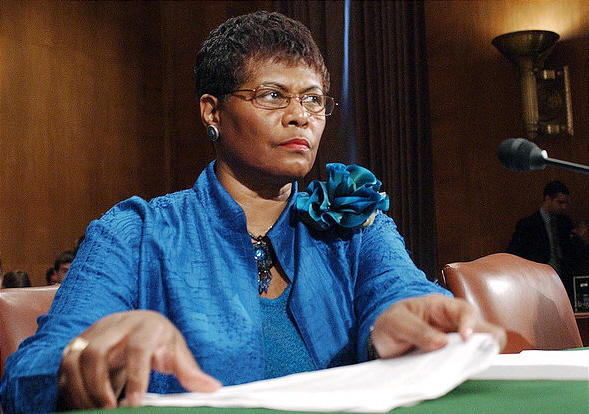
It’s been easy enough to lose track of the story of Bunny Greenhouse, the government employee who blew the whistle on Halliburton’s no-bid contract for reconstruction work in Iraq. Even though she was demoted and transferred, there’s been little coverage in the media, and most shamefully, no investigation or follow-up from the supervising Inspector General, let alone Congress.

Everyone agrees that Bunny Greenhouse is a stickler for detail. She may not be the easiest woman to work with. However, after reading this portrait by Neely Tucker in The Washington Post, I find it hard to question her integrity. Her personal history strongly suggests this is a woman of character. No one has ever accused her of being stupid (she has three master’s degrees), and few people (other than Sherron Watkins at Enron) become whistleblowers to improve their job security. Yet when it came to the Halliburton deals (technically with their subsidiary KBR), Bunny Greenhouse testified to the Senate Democratic Policy Committee:

"I can unequivocally state that the abuse related to contracts awarded to KBR represents the most blatant and improper contract abuse I have witnessed during the course of my professional career."

The contracts were unorthodox. There has been horrendous overbilling by Halliburton. Greenhouse has been punished, yet her supervisors claim this action is not retribution. Wouldn’t these factors necessitate further inquiry? Regarding Greenhouse’s allegations, and her demotion, the Post reports:

A Corps spokesman declined to address the specifics. Instead, the Corps issued a written statement that says the agency followed the law in its dealings with Halliburton. As for Greenhouse's EEOC complaint, the statement said the agency "takes seriously" its employees' right of privacy, and thus could not comment.

Any further investigation appears to be minimal.

This, from another DPC hearing last month, after Greenhouse was demoted:

Sen. Byron Dorgan (D-N.D.): "Ms. Greenhouse, has the Inspector General's Office made any attempt to interview you?"

Greenhouse: "None whatsoever."

Dorgan: "None?"

Greenhouse: "None whatsoever."

Dorgan: "That's unbelievable to me."

I don’t buy the portrayal of Greenhouse by her supervisors as a petty bureaucrat or an incompetent. A more accurate view of her would come from her peers and her subordinates (if they would talk), not just her current bosses, who have every motive to undermine her. The portrait offered by the man who hired her, her former boss, Lt. Gen. Joe Ballard, strongly contrasts any negative accounts. Additionally, the paper trail of past evaluations point to someone who may be demanding but is dedicated... frankly, exactly the sort of person needed to supervise spending of the taxpayer’s money.

My take is that Bunny Greenhouse ran afoul of the ol’ boy network, spoke truth to power, and is now being punished for it. Perhaps that’s not the case. But why has there been no little to follow-up on her case? Why does there remain little to no cost-tracking and accountability for the billions of dollars that continue to be spent in Iraq?